
Howdy Readers 🥰
In this newsletter, you’ll find:
📦 The return you’re paying for started with a spec nobody checked
📊 Google adds new ways to drive sales and clean up analytics
👨💻 Tweet of the day
If you’re new to Buyology then a hearty welcome to you, You’ve reached the right place alongside 50k+ amazing people, Before you forget, if someone forwarded this newsletter to you, don't forget to subscribe to our newsletter so you never miss out!
Together with Modash
You See Their Creator Campaigns. Now Hear Their Thinking.

A creator campaign can look great in your feed and still leave you wondering whether you’d pay to run it again.
Repeating that uncertainty with more creators gets expensive.
On October 21, Modash’s Return on Influence Festival ’26 opens up how established teams run their programs, including the mistakes behind better campaigns.
Here’s what you’ll learn:
How teams run campaigns day-to-day, including what they changed after mistakes.
What creators want from brand partners so that you can approach collaborations from their side.
What it takes to scale from 5 to 5,000 creators before adding more to your own program.
You’ll hear from Maya Shaff, Head of Influencer at ŌURA, and Josh Rangel, Senior Director, Social Strategy at Ogilvy. More to be announced. It’s online and free.
Reserve your spot for Oct 21st and leave with actionable insights to build and scale a creator program that moves the needle.
Can’t attend every session live? Register anyway, and you’ll get the recordings in 24 hours.
📦 The return you’re paying for started with a spec nobody checked
Complete, accurate product specifications reduce return rates by nearly a third, because a customer who arrives with correct expectations doesn’t discover a mismatch after the box opens. That’s not an AI-visibility statistic.
It’s a straightforward operational one, and it means a coverage gap most teams treat as a discoverability problem is quietly also a returns-cost problem, running in parallel on every SKU where the listing and the product don’t fully agree.
The framing matters because these two failures get audited by different teams with different urgency. A discoverability gap shows up as lost traffic or a missed AI citation, something marketing notices and escalates.
A spec gap that drives returns shows up as a fulfillment and customer service cost, absorbed into a different budget where nobody traces it back to the listing that caused it. Same root cause, two teams that never compare notes.
Pull your highest-return SKUs and check the listing first
Before assuming a return is a product-quality or sizing issue, check whether the listing itself set accurate expectations.
Rank your SKUs by return rate and pull the ten worst. For each, compare what the listing states, dimensions, materials, fit notes, against what customers report in return reason codes. A pattern of returns citing “not as described” on a SKU with thin or generic spec fields is a listing problem wearing a product-quality disguise.
Fix the listing before the next return cycle, not after
A returns report that gets read and filed without a corresponding listing fix just guarantees the same return volume shows up again next month, since the gap causing it never actually closed.
Treat every high-return SKU identified this way as a listing fix with a deadline, not a data point for a quarterly review.
The fix is usually cheap, adding a missing dimension, clarifying a fit note, updating a stale photo, while the return it prevents carries real shipping, restocking, and service cost every time it repeats.
Track the coverage gap and the returns cost together
A midi dress labeled full length is a return waiting to happen, and across thousands of SKUs, no team can check every page before customers do.
Zenyt’s AI shopper agents do, reviewing every title, spec, image, and price against your source of truth continuously and ranking what’s costing you most first. It’s how Caudalie added €700K in incremental revenue within 12 weeks, and how LG protected $900K in EBITDA.
Your catalog changes daily between now and Black Friday. You can get your free store analysis before peak traffic finds the gaps first.
A discoverability gap costs you a sale you never got. A spec gap costs you a sale you already made, twice: once to fulfill it, once to process it back.
📊 Google adds new ways to drive sales and clean up analytics
Google is updating both sides of the marketing workflow, adding new Demand Gen placements and shopping features, while giving Google Analytics users an easier way to filter unwanted traffic.
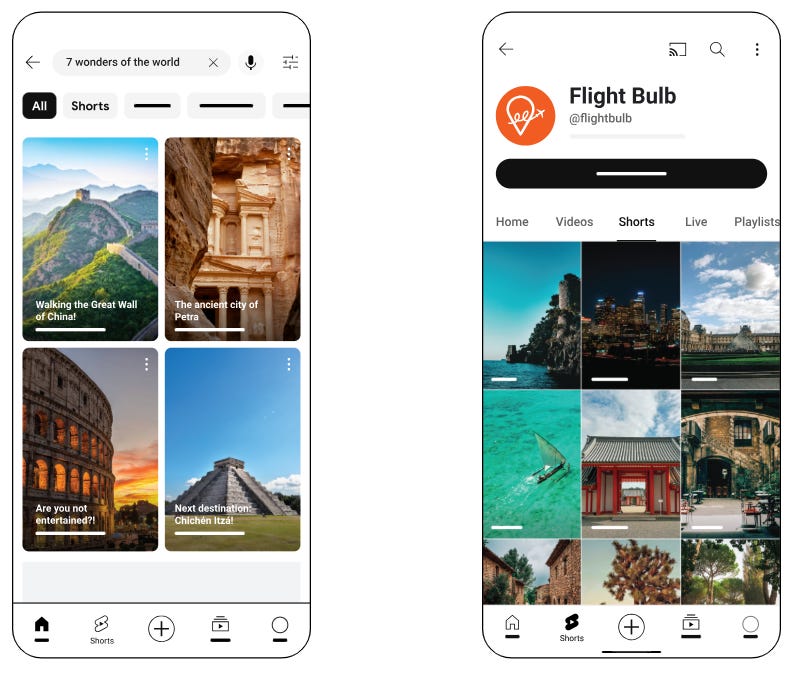
The Breakdown:
Demand Gen Expands - YouTube viewers can ask questions about products without leaving a video, while new single-tap image ads are coming to YouTube Shorts and Gmail.
Maps Gets Promoted Pins - New affiliate location extensions let businesses promote locations directly inside Google Maps. Google says adding Gmail to Demand Gen delivered 40% more image-ad conversions at the same ROI on average.
Analytics Blocks Spam Earlier - Google Analytics now supports hostname Include filters, letting marketers specify approved domains and automatically filter event traffic coming from anywhere else.
Less Cleanup Required - Previously, unwanted hostnames had to be excluded individually. The new allowlist approach can keep reporting cleaner automatically, although Measurement Protocol events are exempt from the filters.
Google is making its advertising tools useful across more of the customer journey, from product discovery on YouTube and quick-response ads to local discovery on Maps. At the same time, hostname allowlists give marketers a simpler way to keep the analytics feeding their decisions cleaner.
🗝️ Tweet of the Day

Advertise with Us
Wanna put out your message in front of over 50,000 best marketers and decision makers?
Checkout our Partner Kit here🤝
At Buyology, we care about our readers and want to provide the best possible experience. That's why we always look for ways to improve our content and connect with our audience. It would be amazing if you could hit us up with feedback about our content or absolutely anything, we are always up for a chat 🥰
Thanks for your support, We'll be back with more such content 🥳