
Howdy Readers 🥰
In this newsletter, you’ll find:
📊 Your MMM says tv worked. now find out which part
🎯 Google Ads is automating more of the campaign work
👨💻 Tweet of the day
If you’re new to Buyology then a hearty welcome to you, You’ve reached the right place alongside 50k+ amazing people, Before you forget, if someone forwarded this newsletter to you, don't forget to subscribe to our newsletter so you never miss out!
📊 Your MMM says tv worked. now find out which part
A TV trade column this week made a point worth repeating. Mix models can tell you whether connected TV worked, but not always why. In the writer’s words, they risk “replacing one oversimplification with another.”
The problem is the bucket. One “CTV” line in a model can hide hundreds of apps, devices and inventory paths, and a linear line hides dayparts and networks. A healthy average can cover for buys that are quietly losing money.
Some teams sidestep the problem by measuring at the buy level from the start.
Tatari, for one, plans, buys and measures streaming, linear and online video on one platform with direct supply, tying results to actual conversions instead of each vendor’s own report.
Nutrafol, Ro and Fiverr run their TV that way, self-serve or full-service at nine-figure spend. You can book a free demo here.
If your plan already runs on a mix model, here’s how to open up the bucket yourself.
Blind spot 1: The single TV line
What the model sees: one return figure for streaming and one for linear.
What it misses: the spread underneath.
Fix it with a split:
Export streaming and linear spend by publisher or network, device, daypart and creative.
Tag every line with its share of total spend this quarter and last.
Flag any line that grew more than 20% in share while total TV returns held flat. In my judgment, that growth is coasting on the average.
Pull those lines into their own holdout or test cell next flight.
A home goods brand might find its streaming line looks fine overall, while spend has drifted toward phone and desktop screens it thought were living-room TV.
Blind spot 2: Frequency
What the model sees: total impressions.
What it misses: the household that saw your spot nine times.
Fix it with exposure bands: group converting households by how often they saw an ad, using bands of 1, 2 to 3, 4 to 6 and 7 or more. Plot cost per conversion for each band. Where it climbs sharply, set your cap one band lower.
Blind spot 3: A leaky geo test
What the model sees: a clean lift between test and control markets.
What it misses: control markets that quietly got ads anyway.
Fix it with hygiene rules:
Keep test and control markets apart, with no shared borders or commuter overlap.
Exclude control markets from every geo-targeted streaming buy during the test.
Before trusting the lift, check that control markets received close to zero impressions.
Run the spend split on your last flight this week, before Q4 budgets lock on an average.
Together with Billo
What Meta’s Changes Mean for Your Next Campaign

Still running the Meta setup that worked six months ago? Your next creative test could be paying for assumptions that no longer hold.
Before you put more budget behind it, understand what’s changed and where creator-led Partnership Ads fit.
On October 7 at 11:00 AM ET, join Donatas Smailys, CEO of Billo, for a free 60-minute live session to:
See Meta’s Partnership Ads data and understand where creator-handle ads could earn a place in your account.
Improve your creative testing with Curtis Howland, VP of Marketing at Misfit Marketing, with $100M+ in Meta spend managed.
Hear directly from Reyna Baker, Partner Manager at Meta, about platform changes that could affect how you spend your budget.
You’ll leave knowing where your Meta setup needs to change and how to put creator-led ads to work before committing more budget.
Can’t attend the session live? Register anyway, and you’ll get the recordings in 24 hours.
🎯 Google Ads is automating more of the campaign work
Google is rolling out three updates that automate more of the work around promotions, creative testing and international expansion, while still giving advertisers controls to review or override what the platform does.
The Breakdown:
AI Localizes Campaigns - A new beta can take an existing U.S. English Search campaign and create an independent version for another market, translating keywords, headlines, descriptions, sitelinks, callouts and even landing-page text.
Google Finds Your Promotions - Starting October 12, Google can scan advertisers’ websites for eligible offers and automatically turn them into promotion assets for certain Search and Performance Max campaigns. Advertisers are opted in automatically but can switch it off.
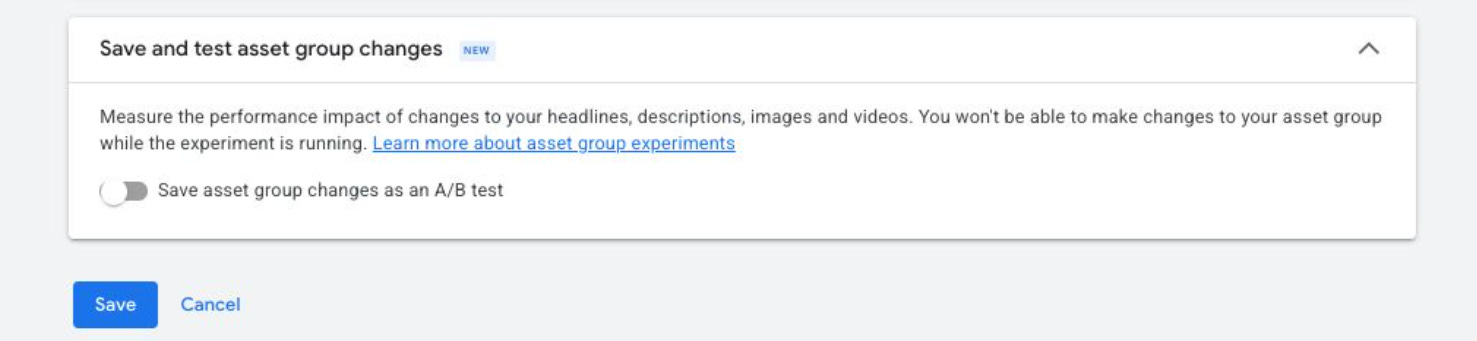
PMax Gets A/B Tests - Advertisers can now test different headlines, descriptions, images and videos within Performance Max asset groups, including UGC versus polished creative, without immediately replacing the existing assets.
Advertisers Keep Some Control - Localization supports instructions like “Don’t translate the brand name,” plus back-translations for review. But budgets and bids are copied unchanged, so currency, market economics and cultural nuances still need manual checks.
Google is moving automation beyond bidding and ad generation into the operational work surrounding campaigns. Promotions can be pulled directly from websites, PMax creative can be tested more systematically, and entire Search campaigns can be localized in minutes. The tradeoff is that advertisers increasingly need to review what Google automates rather than build every element themselves.
🗝️ Tweet of the Day

🥳 Events
🔥 What Makes a Creator Program Worth More Budget
October 21 | Online | Free Festival
See how experienced teams prove creator impact before asking for more spend. Leaders from Adobe, ŌURA, Edelman, Ogilvy, and more will break down the metrics, campaign decisions, and operating systems that help creator programs earn trust, budget, and room to scale.
Can’t attend every session live? Register anyway, and you’ll get the recordings in 24 hours.
🔥 How to Build a Growth Plan That Goes Beyond Meta
October 29 | The Glasshouse, NYC | Free In-Person Event
See how teams are using Reddit, TV, and broader channel mixes to reduce dependence on crowded digital acquisition. Forward puts you in the room with Reddit CEO Steve Huffman, Cody Plofker, and leaders from Liquid I.V., MANSCAPED, Thorne, and Avocado Green Brands.
Advertise with Us
Wanna put out your message in front of over 50,000 best marketers and decision makers?
Checkout our Partner Kit here🤝
At Buyology, we care about our readers and want to provide the best possible experience. That's why we always look for ways to improve our content and connect with our audience. It would be amazing if you could hit us up with feedback about our content or absolutely anything, we are always up for a chat 🥰
Thanks for your support, We'll be back with more such content 🥳