
Howdy Readers 🥰
In this newsletter, you’ll find:
🎯 Your Landing Page Is Where Personalization Goes to Die.
📊 Microsoft and Google Both Dropped Major Ad Updates This Week
👨💻 Tweet of the Day
If you’re new to Buyology then a hearty welcome to you, You’ve reached the right place alongside 50k+ amazing people, Before you forget, if someone forwarded this newsletter to you, don't forget to subscribe to our newsletter so you never miss out!
🎯 Your Landing Page Is Where Personalization Goes to Die.
Here’s the uncomfortable truth about most conversion strategies. The ad gets obsessed over. The targeting gets refined. The creative gets tested to death. Then everyone lands on the same page, one built to speak to every possible buyer, and the conversion rate reflects exactly that.
Personalization that stops at the click isn’t personalization. It’s a theater.
The mechanism most brands misunderstand.
Visitors don’t read landing pages. They run a single subconscious check: “Is this built for someone like me?” The answer gets formed in seconds from the headline, the opening line, and whether the specific tension they arrived with is reflected back at them immediately.
A page that tries to cover every use case fails that check for everyone. Not because the copy is weak. Because the cognitive filtering it forces onto the visitor is friction, and friction kills conversion before the product ever gets a chance to sell itself.
The data that reframes everything.
AirOps analyzed 16,851 ChatGPT queries across 353,799 pages and found that pages with headlines directly matching the query get cited 41% of the time. Loosely related headlines get cited 29% of the time. A 12-point citation gap driven entirely by the specificity of the match.
Three findings from the research that most marketers would argue with until they see the numbers:
Comprehensive pages underperform targeted ones. Pages covering 26-50% of a query’s sub-topics get cited more frequently than pages covering 100%. Trying to address everything signals genericism, not authority.
Domain authority doesn’t predict citation. Pages that consistently get cited actually carry lower domain authority than pages that never do. Content quality and query match are the variables that matter.
Position compounds specificity. A page at position 1 gets cited 58% of the time. Position 10 drops to 14%. Specificity that earns top ranking creates a compounding citation advantage that broad pages can’t access regardless of how comprehensive they are.
The same principle driving AI citation drives human conversion. Specificity signals that the content was built for this exact person with this exact problem. You can read the full AirOps Fan-Out Report.
What avatar-specific pages actually require.
This isn’t a headline swap. It’s a full page reorder around one person’s specific tension, goal, and objection stack:
Lead with the problem they arrived with, not the product’s full benefit list
Pull testimonials that match their specific, context marathon runners see race performance, shift workers see sleep timing, busy parents see energy sustainability
Write FAQs that address their specific objections, not generic purchase hesitations
Remove any benefit that doesn’t apply to this avatar entirely
Same product. Completely different perceived reality. The second page feels engineered for one specific problem. The first feels like a label.
The conversion insight worth internalizing.
Perceived specialization drives perceived effectiveness. When a visitor sees their exact situation reflected in the page architecture, the product feels built for them even when it wasn’t. That’s not copywriting. That’s planned relevance operating at the structural level.
The brands winning conversion in 2026 aren’t building better generic pages. They’re building fewer pages that each feel like the only page that could possibly exist for one specific person.
That’s the gap. And it’s still wide open.
Together with Insense
You don’t need another agency. You need a better system.

More DTC brands are pulling creator marketing in-house because agency models are too slow, too rigid, and too expensive to test at the speed that paid social demands.
Insense is the self-serve platform built for that transition.
Source from 80,000+ vetted creators, interactive brief templates and approvals in one place, automated contracts and payments, and lifetime usage rights included on every piece of content.
Trusted by over 3500 brands like Quince, Paysend, SmileSet, and Monster Energy,
No retainer. No middleman. Full visibility and control from day one. Brands save 40+ hours a month and get first creator applications within 48 hours.
P.S. If you need occasional assistance with influencer scouting, post-production, or platform management, they offer customizable and hybrid managed services.
Book a free strategy call by May 8 and get a $200 platform credit towards your first campaign.
📊 Microsoft and Google Both Dropped Major Ad Updates This Week
Microsoft launched AI-powered ad tools for the agentic web era while Google upgraded call campaign measurement with AI qualification, both pushing advertisers toward smarter, more automated performance.
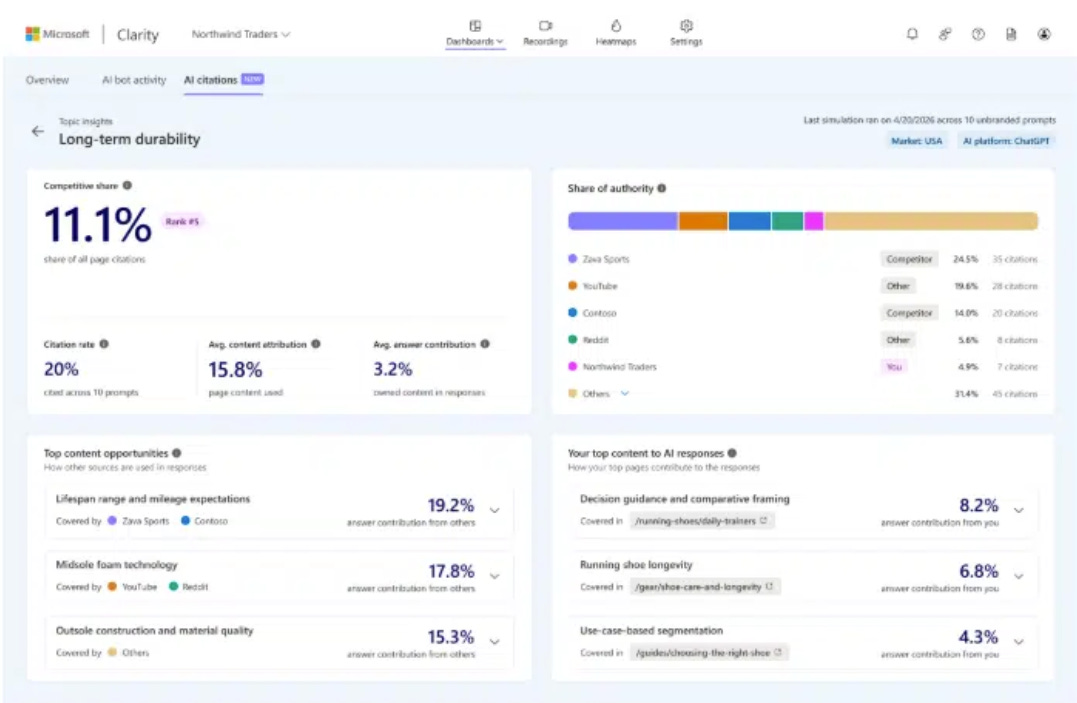
The Breakdown:
Microsoft Is Optimizing for AI selection - Microsoft launched AI Max for Search, expanding query matching and personalizing ad delivery across Copilot and Bing. The shift is from optimizing for clicks to being selected by AI systems, making decisions on the user’s behalf.
New Tools to Show Up in AI Conversations - Offer Highlights surface key selling points inside AI conversations. AI Visibility shows which content gets cited in AI answers. A new audience tool lets advertisers describe their ideal customer in plain language and builds targeting segments automatically.
Google is qualifying calls with AI - Google launched AI-qualified call leads, using machine learning to determine whether calls represent real business opportunities. Smart bidding now optimizes for lead quality rather than call length, filtering out spam and robocalls automatically.
Clearer Reporting, Less Wasted Spend - Advertisers get AI-generated call summaries and tags for every interaction. Call recording is on by default, but can be disabled. Healthcare and financial services are excluded. The feature is currently available only in the US and Canada.
Microsoft also launched Universal Commerce Protocol for AI agent transactions and Copilot Checkout for in-conversation purchases. Early data shows AI-driven traffic growing far faster than human traffic; the window to adapt early is now.
🗝️ Tweet of the Day

Advertise with Us
Wanna put out your message in front of over 50,000 best marketers and decision makers?
Checkout our Partner Kit here🤝
At Buyology, we care about our readers and want to provide the best possible experience. That's why we always look for ways to improve our content and connect with our audience. It would be amazing if you could hit us up with feedback about our content or absolutely anything, we are always up for a chat 🥰
Thanks for your support, We'll be back with more such content 🥳