
Howdy Readers 🥰
In this newsletter, you’ll find:
🤖 Your creator content now has a second job
🛍️ YouTube and Reddit are automating more of advertising
👨💻 Tweet of the day
If you’re new to Buyology then a hearty welcome to you, You’ve reached the right place alongside 50k+ amazing people, Before you forget, if someone forwarded this newsletter to you, don't forget to subscribe to our newsletter so you never miss out!
Together with Levanta
Your Affiliate Roster Should Make You More Money

A roster with hundreds of creators looks healthy until you check the sales.
If fewer than 10% have converted in 90 days and no new partners joined last month, the program is quietly losing revenue every week.
Levanta shows you what is stalling growth and which partners can move products, so more budget reaches relationships producing measurable returns.
REVO generated $1M+ in affiliate-driven sales, with 96% coming from new-to-brand customers.
Grace & Stella added $350K+ in affiliate revenue while its Amazon sales rank climbed from #520 to #28.
Acquco grew monthly affiliate sales from $1,500 to $36,000 in four months after adding 130+ creator partnerships.
You get a growing roster and clear visibility into which relationships drive sales. More converting external traffic can also help your products climb Amazon’s rankings.
Levanta’s self-diagnostic reveals which gaps are holding back your program and where your next growth opportunity may be hiding.
🤖 Your creator content now has a second job
New holiday shopping research found something most teams haven’t priced into creator strategy: shoppers who trust AI recommendations are six times more likely to also trust creators.
Forty-three percent bought something an AI chatbot recommended in the last three months, and that experience made them more receptive to creator content, not less.
That connection has a consequence most creator briefs never account for.
A piece of UGC doing well organically isn’t just performing for humans scrolling past it. It’s also source material a model might pull from when a shopper asks an AI assistant for a recommendation, whether the creator or brand intended that.
Write briefs that hold up as a citable answer, not just a scroll-stopper
A hook built purely for watch time, a cold open with no context, a joke that only lands with sound on, can be genuinely excellent for organic reach and completely useless as anything an AI system could extract.
Add one requirement to your next batch of briefs: somewhere in the first few seconds, the creator states plainly what the product does and who it’s for, in language that makes sense as a standalone sentence pulled out of context.
This costs nothing in production and doesn’t compromise the hook, since it’s a sentence, not a rewrite.
Check whether your winning organic content is showing up outside its original platform
Content that performs well organically sometimes gets referenced in places you never posted it, comment threads, aggregator sites, community forums, the layer AI systems increasingly draw from.
Search your product name alongside the core claim your best-performing content makes. Where it’s echoed somewhere you didn’t post it, that’s a signal the content is doing work beyond its original platform, worth knowing which pieces carry that weight.
Treat your best creator content as evergreen infrastructure, not a single campaign asset
Content built to double as a citable answer keeps earning long after the campaign that funded it ends, since an AI system pulling from it doesn’t care when it was posted, only whether it still answers the question.
Identifying which pieces are quietly doing that double duty is what Insense helps ecommerce brands scaling past $2M track, trusted by Il Makiage, Quince, Huda Beauty, and Monster Energy. You can book a free strategy call to map creator availability in your niche and get $200 toward your first campaign.
A creator used to get paid once for a post. Increasingly, that post keeps working long after the invoice clears.
🛍️ YouTube and Reddit are automating more of advertising
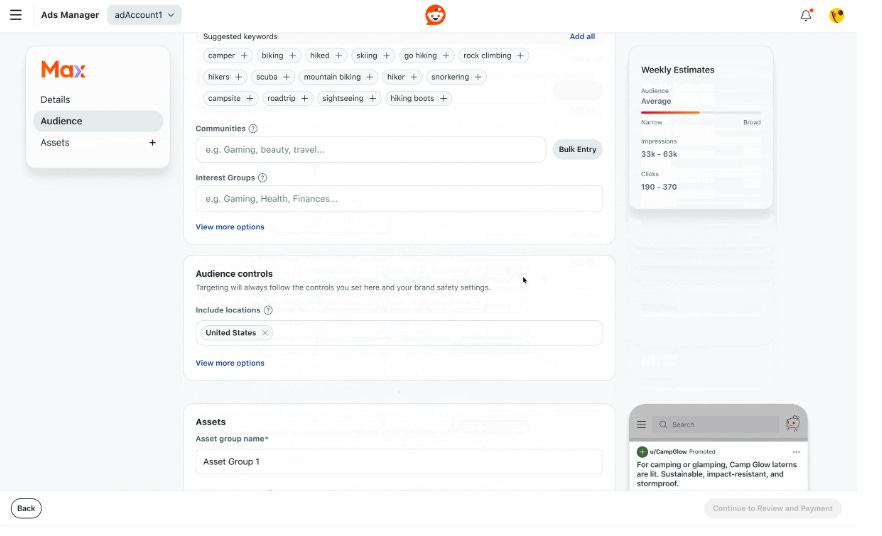
YouTube is improving affiliate shopping and branded-content compliance, while Reddit is opening its AI-powered Max campaigns to every advertiser after reporting stronger conversion performance during testing.
The Breakdown:
Reddit Max opens to everyone - Reddit’s AI-powered campaigns can automate targeting, creative selection, placements, and budgets, while new asset groups let advertisers organize and measure different products or messages separately.
Early Max campaigns delivered stronger results - Reddit says beta advertisers averaged 17% lower CPA and more than 27% additional conversions, with API and Smartly support now expanding campaign management options.
YouTube tests smarter affiliate sourcing - YouTube can show the same creator-tagged product from a different eligible local retailer, testing whether better availability and delivery can increase affiliate sales.
Branded content disclosures get stricter - YouTube is adding clearer labels, age and location restrictions, and automated detection that can apply disclosure labels when creators fail to identify sponsored content.
Both platforms are reducing manual work across commerce and advertising. YouTube is automating product sourcing and compliance, while Reddit is using AI to handle more campaign decisions and make performance advertising easier to manage.
🗝️ Tweet of the Day

Advertise with Us
Wanna put out your message in front of over 50,000 best marketers and decision makers?
Checkout our Partner Kit here🤝
At Buyology, we care about our readers and want to provide the best possible experience. That's why we always look for ways to improve our content and connect with our audience. It would be amazing if you could hit us up with feedback about our content or absolutely anything, we are always up for a chat 🥰
Thanks for your support, We'll be back with more such content 🥳