
Howdy Readers 🥰
In this newsletter, you’ll find:
😤 Your best blog is stealing your sales
🛍️ YouTube Lowers the Bar for Shopping Commissions While Google Upgrades Demand Gen
🚀Quick Hits
If you’re new to Buyology then a hearty welcome to you, You’ve reached the right place alongside 50k+ amazing people, Before you forget, if someone forwarded this newsletter to you, don't forget to subscribe to our newsletter so you never miss out!
Together with Grapevine
Consumers trust experts. They tolerate brands.

Consumers can smell a brand talking about itself. They scroll past it automatically, it doesn’t matter how good the creative is.
What they don’t scroll past: a registered dietitian recommending a protein bar. A dermatologist breaking down a skincare routine on camera. A running coach reviewing a shoe mid-run.
Your branded handle is working against you. Not because the creative is bad, but because the source is discounted before anyone reads the first line.
Grapevine runs creator whitelisting and publisher advertorial as one fully managed service. Brief to launch, no platform juggling, no separate agency relationships.
Nood hit 4× ROAS while scaling spend using whitelisted creator ads
Honeylove cut CPAs by over 20%, combining creator and publisher handles
Mathnasium cut Meta CPL by 33% in under 30 days
Grapevine ads outperform branded creative by 25%+ across platforms. Consistently, not occasionally.
👉 Book a free strategy call for your first campaign strategy session - no commitment required.
😤 Your best blog is stealing your sales
Here’s a quick test worth running right now. Type your brand name alongside your core service into Google. If a blog post is sitting above your actual product or service page, you have a structural problem that no amount of new content will fix.
The site isn’t underperforming. It’s misdirecting.
The mechanics behind the problem.
Search engines don’t inherently favor commercial pages. They favor pages with the strongest signal profile, links, engagement, and crawl frequency.
Blog content accumulates all three naturally. It gets shared in newsletters, cited in roundups, and referenced in forum threads. Commercial pages rarely earn that kind of organic attention, which means they depend almost entirely on internal architecture to compete.
When that architecture is ambiguous, when blog content and revenue pages chase the same keywords with no clear hierarchy, the blog wins by default. Not because it deserves to. Because it has more signals pointing at it.
The revenue impact nobody is calculating.
Ranking isn’t the goal. Converting is. A blog post sitting in a commercial keyword position pulls in informational traffic: people researching, comparing, not buying. They read, they leave, and the conversion event never happens.
Meanwhile, the page built to close that visitor is buried. The impression gets logged. The revenue doesn’t follow. At scale, this creates entire keyword clusters where visibility exists but produces nothing.
The three fixes that actually hold.
Restructuring the hierarchy isn’t complicated but it has to be done deliberately:
Separate the keyword strategy cleanly. Commercial pages own transactional queries. Blog content owns informational ones that feed into the commercial pages, not compete with them.
Rebuild internal linking with intent. Every relevant blog post should pass equity back to the commercial page through descriptive anchor text that reinforces what that page is about.
Eliminate canonical ambiguity. Google needs a single unambiguous answer about which page owns each keyword cluster. If that answer isn’t clear in the architecture, it will guess, and it will often guess wrong.
If consolidating a blog post into the commercial page makes the content stronger, do it. One page with a clear intent outperforms two pages splitting the signal every time.
The deeper pattern this reveals.
A blog outranking a product page isn’t just a technical issue. It’s a sign that content is being produced faster than the structure supporting it is being maintained. That gap compounds. More posts, more keyword collisions, more equity dilution across pages that were never designed to coexist.
Planable surveyed 186 agencies and found that the ones running the strongest margins consistently fix operational and structural problems before adding more output. The content calendar isn’t the bottleneck. The architecture it publishes into is. You can get their free Agency Profitability Report here.
More content in a broken hierarchy makes the problem worse. A cleaner structure makes everything already published work harder.
🛍️ YouTube Lowers the Bar for Shopping Commissions While Google Upgrades Demand Gen
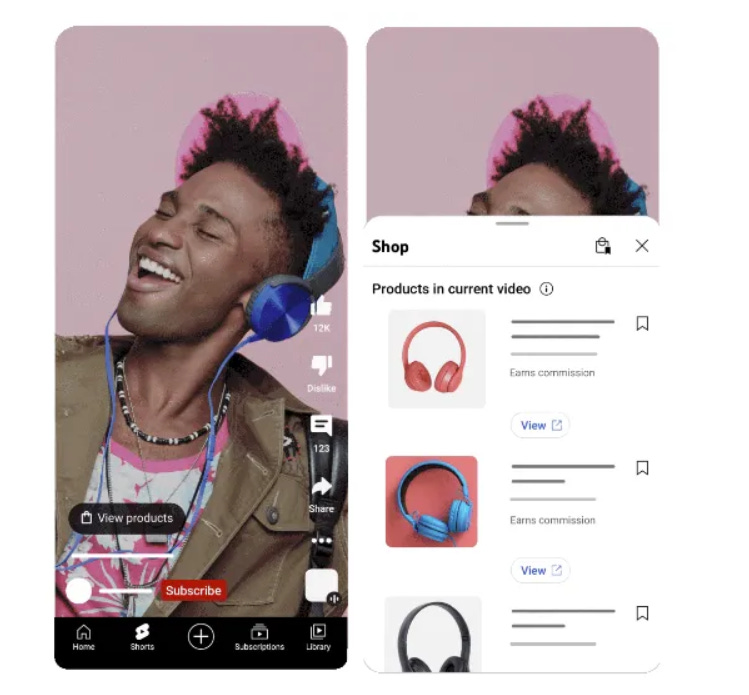
YouTube dropped its Shopping Affiliate Program threshold to just 500 subscribers. Google also added AI video creation and creator partnership tools to its Demand Gen campaigns.
The Breakdown:
1. Smaller Creators Can Now Earn Shopping Commissions - The subscriber requirement dropped from 1,000 to 500, down from 20,000 in 2023. Creators can tag products across Shorts, VOD, and Live content. Some report up to 15x revenue boosts from shopping links.
2. In-Stream Shopping Is a 2026 Priority - YouTube CEO Neal Mohan flagged in-stream shopping as a key focus area. The program is live across 12 markets, including the US, India, Brazil, and Japan. Expect more commerce integrations this year.
3. Google Adds AI Video and Creator Tools to Demand Gen - Advertisers can now use Veo 3.1 to generate video ads from static images. A new Creator Partnerships feature inside Google Ads helps brands discover YouTube creators and turn their content into ads directly.
4. New YouTube Engagements Goal for Demand Gen - Brands can now optimize Demand Gen campaigns for YouTube channel subscriptions and follow-on views. Linking a Google Ads account to a YouTube channel unlocks these as trackable conversion actions.
YouTube is making commerce accessible to smaller creators while Google gives advertisers more AI-powered creative tools and deeper YouTube integration. Both moves push video closer to the transaction. If you’re running Demand Gen, the creator partnership and engagement tracking features are worth testing.
🗝️ Tweet of the Day

Advertise with Us
Wanna put out your message in front of over 50,000 best marketers and decision makers?
Checkout our Partner Kit here🤝
At Buyology, we care about our readers and want to provide the best possible experience. That's why we always look for ways to improve our content and connect with our audience. It would be amazing if you could hit us up with feedback about our content or absolutely anything, we are always up for a chat 🥰
Thanks for your support, We'll be back with more such content 🥳