
Howdy Readers 🥰
In this newsletter, you’ll find:
💪Warm up Lists, Not Pixels
🧭 Google Refines Ad Controls, UI, and Attribution Clarity
🚀Tweet of the Day
If you’re new to Buyology then a hearty welcome to you, You’ve reached the right place alongside 50k+ amazing people, Before you forget, if someone forwarded this newsletter to you, don't forget to subscribe to our newsletter so you never miss out!
Together with Traffic Grid
2025’s Cost Of Newsletter Growth Is Too Dang High

95% of newsletter publishers think adding new subscribers is crazy-expensive, and that’s before calculating the “zero-value subscribers” who open one email and vanish forever.
But what if you could test a subscriber growth system that drops your cost-per-lead below $1 and actually delivers readers who care?
TrafficGrid helps serious publishers scale profitably with high-intent, engaged leads.
Acquire real readers under $1 per lead, not passive subscribers.
Tap into intent-based audiences that crave your niche.
See 50%+ open rates and thousands of engaged clicks.
One sports publisher hit 53.14% open rate and over 1,100 clicks in just 30 days with TrafficGrid.
You can test it yourself with 200 free leads. To qualify, you’ll need 5K+ highly engaged U.S. subscribers.
Book your free strategy call and scale your Newsletter now!
💪Warm up Lists, Not Pixels
Product launches break not because the offer is weak, but because belief wasn’t built before the click.
Most DTC brands treat their newsletter like a billboard: static, late, and reactive. But high-velocity operators use it like infrastructure, a preloaded trust layer that does the work before the ad fires. It doesn’t just warm traffic. It rewires how the buyer thinks about price, status, and timing, weeks before the product is even for sale.
And in 2025, when acquisition costs are punishing and cash cycles are unforgiving, this is the difference between sellouts and stockpiles.
🧠 The Real Launch Stack: Ads Don’t Drive Belief, Newsletters Do
Forget “pre-launch buzz.” That’s entry-level.
The real game is pre-conversion conditioning, using the inbox to script the psychological runway that the ad can land on cleanly. This isn’t storytelling for engagement. It’s context injection at scale:
Week 1: Shift the frame (“Why current X solutions are broken”)
Week 2: Seed the future (“What a better X looks like”)
Week 3: Reveal alignment (“We built it for people like you”)
Week 4: Then launch (“Get early access now”)
By the time the paid media hits, the reader isn’t deciding if they want it, they’re relieved it’s finally available.
This strategy collapses if your list is full of passive skimmers. You need readers with real intent, not just inbox presence.
That’s where TrafficGrid earns its keep, not just by dropping sub-$1 leads, but by curating interest-aligned subscribers who actually want to hear from you. These aren’t just email collectors, they’re belief-layer accelerants.
In multiple launches, TrafficGrid-fed lists converted 2.3x higher not because the leads were cheaper, but because they responded to narrative. They were primed to believe, which means they were ready to buy.
🔄 Why This Isn’t Just a “Content Strategy”
Treating the inbox like infrastructure creates 3 deep-stack advantages:
Faster Capital Recovery – Launches convert more up front, which closes your CAC: LTV gap days faster.
Cashflow Agility – High-trust launches mean inventory moves quickly, freeing up working capital without external debt.
Belief Compounding – Every newsletter shapes not just current buyers, but future launch readiness; you’re building demand equity.
The inbox becomes your conversion engine, debt reducer, and brand moat. All in one.
Don’t just grow your list. Build launch infrastructure. Feed it with the right people, and engineer for belief, not just visibility.
🧭 Google Refines Ad Controls, UI, and Attribution Clarity
Google and Meta are rolling out updates that reshape how advertisers control, measure, and interpret ad performance, from cleaner Search interfaces to more transparent attribution models. Each update reflects a shared push toward simplicity, accountability, and user control across platforms.
The Breakdown:
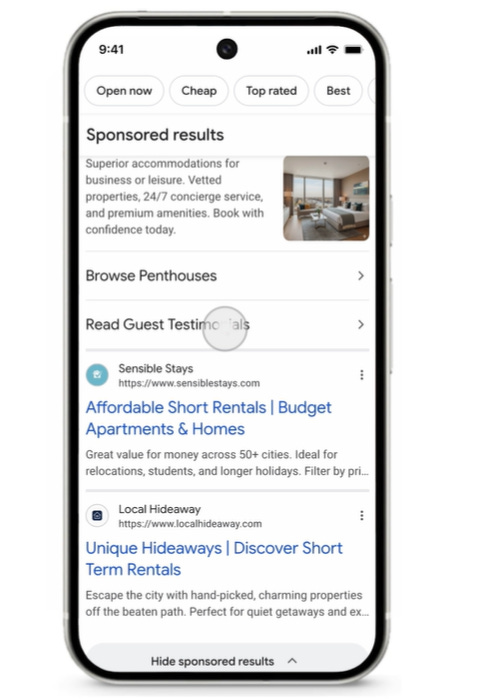
1) Clearer Ad Navigation in Google Search - Google is improving ad visibility with a new “Sponsored results” label that groups text and Shopping ads under one header on desktop and mobile. The label remains visible as users scroll, and a new “Hide sponsored results” option lets them collapse ads to view only organic results.
2) Updated Auto-Apply Recommendations in Google Ads - Google Ads has relocated the Auto-Apply Recommendations control within its interface, now placed above the recommendations section. The change simplifies access and ensures advertisers can quickly enable or disable automated optimizations after onboarding clients.
3) Meta Redefines Click Attribution for Ads - Meta has finally clarified its click attribution definition, confirming that it includes any click on an ad, from likes and shares to saves, within a 1-day or 7-day window.
These updates collectively mark a new era of advertiser control and transparency. Google is giving users cleaner ad navigation and clearer automation settings, while Meta is tightening attribution definitions. For marketers, this means adapting measurement strategies and creative placement to thrive in a more transparent, user-driven ecosystem.
🗝️ Tweet of the Day

Advertise with Us
Wanna put out your message in front of over 50,000 best marketers and decision makers?
Checkout our Partner Kit here🤝
At Buyology, we care about our readers and want to provide the best possible experience. That's why we always look for ways to improve our content and connect with our audience. It would be amazing if you could hit us up with feedback about our content or absolutely anything, we are always up for a chat 🥰
Thanks for your support, We'll be back with more such content 🥳