
Howdy Readers 🥰
In this newsletter, you’ll find:
📱 The SMS credits you paid for and never used are gone
📊 Google and Snapchat give marketers more control
👨💻 Tweet of the day
If you’re new to Buyology then a hearty welcome to you, You’ve reached the right place alongside 50k+ amazing people, Before you forget, if someone forwarded this newsletter to you, don't forget to subscribe to our newsletter so you never miss out!
📱 The SMS credits you paid for and never used are gone
Klaviyo’s mobile messaging system works on a monthly credit allowance tied to your plan tier, and that balance resets at the end of every billing period with no rollover. Underuse your SMS credits in a slow month and the unused capacity doesn’t carry forward. It’s simply gone, and you paid for it anyway.
Most teams never notice this in a normal month, because SMS volume tracks roughly flat and the allowance mostly gets used. BFCM breaks that pattern completely.
A brand that sends a steady trickle of SMS in October and then triples or quadruples volume in the two weeks around Black Friday either burns through its allotted credits fast and pays overage rates, or it was sized for peak all year and has been quietly overpaying for capacity it never touched the other eleven months.
Calculate your real cost per message, not your plan’s sticker price
Pull your actual SMS sends for a normal month and for last year’s BFCM week separately. Divide your monthly SMS line-item cost by messages actually sent in each period.
The two numbers are rarely close. A plan that looks efficient against average monthly volume can be dramatically more expensive per message in the low months and still fall short in the high ones, since the credit reset punishes both underuse and overage in different directions.
Model your BFCM SMS volume before you’re inside peak week
Estimate your actual send volume for the BFCM stretch specifically, based on last year’s campaign calendar and cart-recovery cadence, not your average month.
Compare that number against what your current tier actually allows before assuming your plan scales cleanly into peak. A gap discovered mid-week during your highest-revenue period costs more than the overage itself, since the alternative is throttling sends at the exact moment they matter most.
Weigh the migration math against the price direction you’re already paying into
Klaviyo has raised SMS pricing this year, which compounds the reset problem rather than offsetting it. One agency ran this calculation on a client’s numbers and migrated to Omnisend just weeks before Black Friday anyway, in under five business days, landing $113K in holiday revenue that matched the year before.
Omnisend plans run up to 35% less than Klaviyo’s, with average returns of $79 for every $1 spent across more than 150,000 ecommerce brands on the platform. Jocelyn A., COO at Ecom2Win, walks through why the timing made sense despite the risk You can read the full story.
A credit system that quietly deletes what you don’t use is a normal-month inconvenience. At BFCM volume, it’s a line item worth pricing out before the season starts, not during it.
Together with AirOps
The Growth Targets Changed. Did Your Plan?

Growth targets are rising faster than the resources behind them, forcing marketing teams to make critical budget decisions without a credible view of how peers are responding.
AirOps surveyed 300+ CMOs and VPs to reveal how leaders are reallocating budgets and closing capability gaps as pressure grows to deliver more pipeline with limited support.
Compare how peers are responding to higher targets, now affecting 75.4% of marketing leaders across the market.
Build a stronger budget case using the reality that only 43.0% received more funding.
See why 86.6% prioritize AI search while just 23% feel confident measuring its impact.
The report lets you compare your growth targets and available resources against responses gathered directly from 300+ marketing leaders.
You’ll immediately see whether your performance gap starts with execution or a plan that was under-resourced from day one.
Get the Marketing Leaders Reality Index.
📊 Google and Snapchat give marketers more control
Snapchat is improving attribution, Google is giving publishers visibility into AI Search, and new YouTube data shows how specific creative choices can materially change advertising performance.
The Breakdown:
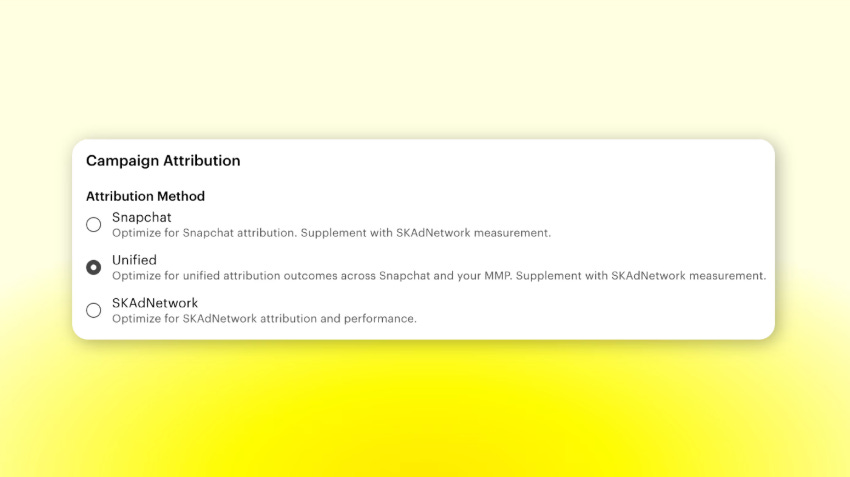
Snapchat unifies app attribution - Unified Attribution is now available globally, combining Snap performance with AppsFlyer or Adjust data so advertisers can optimize campaigns against installs, purchases, and other business outcomes.
Google opens up AI Search reporting - Search Console now shows impressions across AI Overviews, AI Mode, and other generative features globally, broken down by pages, countries, devices, and dates.
Publishers can opt out of Google AI - A new Search Console control lets websites block content from Google’s generative AI features without affecting rankings in traditional Search, though they lose AI impressions and traffic.
YouTube reveals what improves conversions - Google says human voice correlates with 12% higher conversions, text overlays with 3%, and showing the brand within five seconds with 4% higher conversions.
Creative may be the biggest lever here. Nielsen research cited by Google attributes 49% of campaign ROI to creative, while Ekimetrics found improving YouTube creative can more than double ROI. Google recommends human presence, native-looking imagery, early branding, and avoiding fake buttons or UI elements that could confuse viewers.
🗝️ Tweet of the Day

Advertise with Us
Wanna put out your message in front of over 50,000 best marketers and decision makers?
Checkout our Partner Kit here🤝
At Buyology, we care about our readers and want to provide the best possible experience. That's why we always look for ways to improve our content and connect with our audience. It would be amazing if you could hit us up with feedback about our content or absolutely anything, we are always up for a chat 🥰
Thanks for your support, We'll be back with more such content 🥳