
Howdy Readers 🥰
In this newsletter, you’ll find:
⚖️ The FTC doesn’t fine your affiliates. It fines you.
🎥 Google and Reddit are betting more on video
👨💻 Tweet of the day
If you’re new to Buyology then a hearty welcome to you, You’ve reached the right place alongside 50k+ amazing people, Before you forget, if someone forwarded this newsletter to you, don't forget to subscribe to our newsletter so you never miss out!
Together with Insense
The 3-Step Playbook for Winning BFCM Before October

By October, CPMs can already be 20–60% higher. Brands that win BFCM build their creator roster in September, while costs are lower and there’s still time to find proven winners.
Here’s the playbook:
Seed now so creators know the product before November. Seed in Aug-Sep and flag organic winners early, since 81% of BFCM collaborations involve repeat creators.
Source modular UGC with flexible hooks and raw footage. Refresh fatigued ads without funding another shoot.
Run proven creators across organic and paid. Put winning content behind the creator’s handle to carry existing trust into each impression.
Bonus: Connect Ads Manager to Insense’s performance dashboard to identify the creators driving performance, then rehire them before availability tightens.
Insense helps DTC brands scaling beyond $2M build repeat creator rosters and is trusted by Il Makiage, Quince, Huda Beauty, and Monster Energy.
⚖️ The FTC doesn’t fine your affiliates. It fines you.
Every affiliate program runs on the same unspoken assumption: the person posting the review holds the legal risk, since they’re the one wearing the “material connection” to your product. The FTC doesn’t see it that way.
The agency has sent warning letters straight to brands over an affiliate’s undisclosed post, not just to the creator who wrote it, and the statutory ceiling sits at $51,744 per violation, per day.
That number rewrites what an affiliate program actually is. It was never a channel where you pay for outcomes and stay clear of how they got produced. It’s a channel where the legal exposure sits with you, for content you never wrote and, in most programs, never even saw.
Exhibit A: the format is the risk, not the partner
Compliance failures cluster by format, not by name on the roster. Short-form video and livestreams, where disclosure has to survive an unscripted moment instead of a written post, and email newsletters, which quietly drop the language entirely, are where enforcement guidance points hardest.
Pull a sample from those two formats specifically, not from your highest earners as a stand-in for lowest risk. A top earner running clean and a mid-tier partner posting undisclosed Stories are not the same risk, and revenue share won’t tell you which is which.
Exhibit B: most violations are accidents, not evasions
FTC guidance keeps tracing failures to ignorance, not defiance. A creator raised on casual posting genuinely doesn’t know “affiliate link” has to sit in the first few lines of a caption, above the fold, not buried in a bio link three taps deep.
Build a short, format-specific disclosure guide into the onboarding message every new affiliate gets, and make it required, not a document nobody opens. That costs a fraction of a warning letter, and far less than losing a partner over a dispute neither side saw coming.
Exhibit C: a roster you can’t see is a liability you haven’t priced yet
Hundreds of names with zero visibility into who’s disclosing and who isn’t is not a program you can defend when the letter shows up; it’s exposure sitting quietly on a spreadsheet.
Seeing which partners are actually driving compliance, converting traffic, instead of managing a roster with blind spots baked in, is what Levanta’s platform surfaces. You can take the self-diagnostic here to find out where your program’s actual gaps sit.
A dead partnership costs you revenue. An undisclosed one costs far more, and the FTC sends that bill to you, not your affiliate.
🎥 Google and Reddit are betting more on video
Google is expanding AI tools for creating and understanding visual content, while Reddit is giving advertisers a new way to optimize campaigns around viewers who spend longer watching video ads.
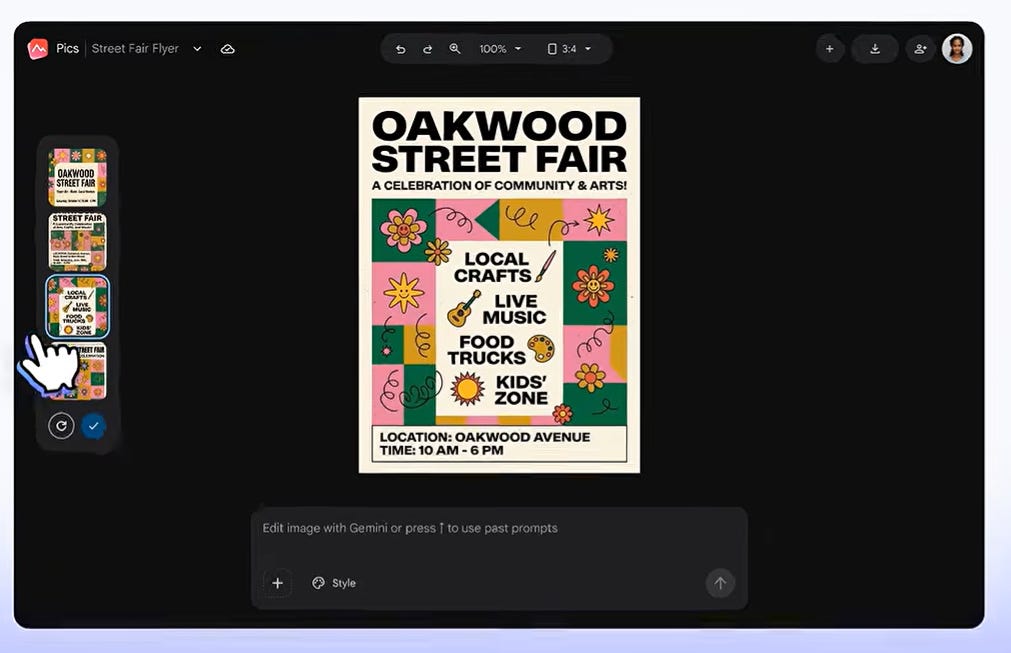
The Breakdown:
Google Pics expands AI image creation: Powered by Nano Banana, Pics adds advanced generation, editing, customization, and language translation tools designed to create and modify visual content from one interface.
Gemini can analyze videos more deeply: Google’s agentic video understanding can inspect clips, identify what happened and who presented it, and extract specific details with improved speed and lower token usage.
AI video understanding is expanding across Google: The technology is coming to Gemini’s Flash and Flash-Lite models and will eventually improve Ask YouTube answers by grounding responses in video visuals.
Reddit targets 15-second viewers: Advertisers can now optimize campaigns for people likely to watch at least 15 seconds, with beta split testing available against Reddit’s existing six-second objective.
Both updates focus on extracting more value from visual content. Google is making images and videos easier to create and understand with AI, while Reddit is helping advertisers optimize video campaigns around deeper viewer attention.
🗝️ Tweet of the Day

Advertise with Us
Wanna put out your message in front of over 50,000 best marketers and decision makers?
Checkout our Partner Kit here🤝
At Buyology, we care about our readers and want to provide the best possible experience. That's why we always look for ways to improve our content and connect with our audience. It would be amazing if you could hit us up with feedback about our content or absolutely anything, we are always up for a chat 🥰
Thanks for your support, We'll be back with more such content 🥳