
Howdy Readers 🥰
In this newsletter, you’ll find:
📺 The same ctv ad doesn’t work the same way on every platform
🛍️ YouTube and Pinterest are making shopping and ads more AI-driven
👨💻 Tweet of the day
If you’re new to Buyology then a hearty welcome to you, You’ve reached the right place alongside 50k+ amazing people, Before you forget, if someone forwarded this newsletter to you, don't forget to subscribe to our newsletter so you never miss out!
Together with AirOps
Your Buyers Asked AI. Did Your Brand Appear?
AI is already deciding which B2B tools reach your buyers’ shortlists. If your brand is missing from trusted sources, competitors can win consideration before sales enters the conversation.

On September 29, Foundation CEO Ross Simmonds and AirOps search marketing lead Josh Spilker will unpack research spanning nearly 380,000 AI answers, 3 million citation events, and 81 enterprise software topics.
You’ll walk away knowing how to:
Build a platform-specific source map across six AI engines, showing where to earn visibility for the buying prompts that matter
Turn the 84-of-100 dominance of comparison pages and listicles into a clear publishing plan for content AI platforms already cite
Find and fix unfavorable comparisons before they spread across hundreds of answers and quietly steer buyers toward competitors.
You’ll leave knowing which prompts to track, which sources to prioritize, and where your team should invest first to influence AI-driven buying decisions.
Join live at 1 p.m. ET on September 29.
Can’t attend the session live? Register anyway, and you’ll get the recordings in 24 hours.
📺 The same CTV ad doesn’t work the same way on every platform
A CTV creative built once and run identically across Roku, Peacock, and Paramount+ treats three different viewing contexts as one screen. Roku sits at the center of a viewer’s browsing experience, where clarity and speed win, product visible fast, an offer readable from across the room.
Peacock skews toward live sports and event programming, where creative riding that same energy outperforms something that feels like a quiet interruption.
Paramount+ leans toward fandom-scale content, where creative built around stakes and a strong point of view fits the audience’s existing relationship with what they’re watching.
Most CTV buys still run one master creative across every platform, optimized for none of them specifically. That’s not a technical failure the way a safe-zone violation is.
It’s a strategic one: a fast-to-product Roku approach reads as flat dropped into a Peacock sports break, and a bold Peacock approach can feel like noise inside Paramount+’s more narrative environment.
Audit which platforms in your plan get tailored creative versus a shared one.
Most teams can answer which platforms they’re buying without being able to answer which platforms actually get creative built for their context, versus inheriting whatever master asset was produced for the plan overall.
Pull your current CTV media plan and mark each platform as either running platform-specific creative or a shared master asset. Where the platform’s context doesn’t match what the creative was built for, that’s a mismatch worth fixing before the next flight, not after this one underperforms.
Build creative variants around context, not just format compliance
Safe zones, resolution, and file specs are the baseline every platform requires. Context-fit is a separate, higher-value layer most teams stop short of, treating spec compliance as if it were the whole creative job.
For your top two or three CTV platforms by spend, write a one-line creative brief specific to each: what tone fits the context, how fast the offer needs to land, whether the audience responds to energy or narrative.
That’s a cheap addition to an existing process and a real differentiator most competitors aren’t bothering with.
Test platform-specific creative against the shared master before rolling it out fully.
Assuming platform-specific creative outperforms a shared master is a reasonable hypothesis that still needs its own test before becoming the standard across a full media plan.
The catch is that you can’t settle that test inside any one platform’s reporting, because each one only grades the creative it served. You need a single read across all three.
Tatari is built for exactly that: streaming, linear, and online video bought and measured on one platform, with results broken out by individual creative, so the platform-specific variant and the shared master get compared on the same conversion yardstick instead of two vendor dashboards.
Vuori, Nutrafol, Calm, Ro, Magic Spoon, and Fiverr run their TV this way, self-serve for a first flight or full-service at nine-figure spend.
Fifteen minutes with their team will tell you which of your creatives is actually earning its placement. You can book a free demo here.
A media plan that buys three platforms and ships one creative isn’t running three campaigns. It’s running one campaign three times, in three contexts it was never built for.
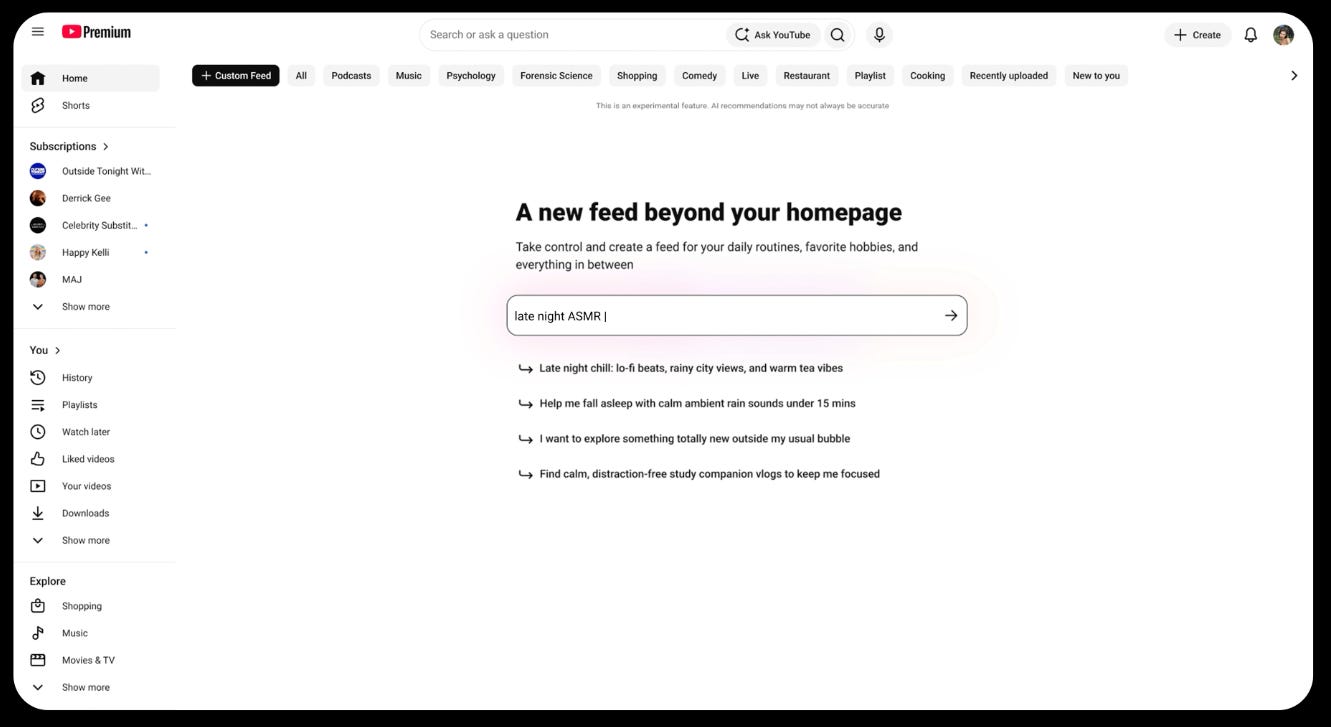
🛍️ YouTube and Pinterest are making shopping and ads more AI-driven
YouTube is adding AI-powered product discovery and smarter shopping tags, while Pinterest is giving advertisers a new way to see whether their campaigns are set up for stronger Performance+ results.
The Breakdown:
AI Compares Products - Ask YouTube can now organize product review videos into comparison tables with relevant attributes. After choosing a video, shoppers can ask follow-up questions about the product directly from the watch page.
Shopping Tags Get Smarter - YouTube is testing dynamic product tags that appear more prominently when viewers show shopping interest and stay in the description when they do not. YouTube says this won’t affect video reach or recommendations.
Pinterest Scores Campaigns - A new campaign optimization score shows how closely an advertiser’s setup follows practices associated with stronger performance, including Performance+ adoption, broad targeting, creative variety and consistent budgets.
More Creative, More Signals - Pinterest recommends using at least three ad formats and five or more distinct ads to give Performance+ enough signals to optimize. Advertisers using Performance+ previously saw a 10% improvement in CPC and CPA versus traditional setups.
Both platforms are using AI to reduce friction at different stages of shopping. YouTube is helping people compare, research and discover products inside videos, while Pinterest is helping advertisers improve campaign setups with predictive guidance and more automated creative optimization.
🗝️ Tweet of the Day

🥳 Events
🔥 What Changes When Creator Programs Scale From 5 to 5,000
October 21 | Online | Free Festival
Return on Influence Festival ’26 opens up the systems behind large creator programs, including how teams track ROI, improve partnerships, and avoid operational chaos as volume grows. Hear directly from leaders at Adobe, ŌURA, Edelman, Ogilvy, and more.
Can’t attend every session live? Register anyway, and you’ll get the recordings in 24 hours.
🔥 Where to Put Your Next Growth Dollar Beyond Meta
October 29 | The Glasshouse, NYC | Free In-Person Event
Hear how Reddit CEO Steve Huffman thinks about discovery, how Cody Plofker helped scale Jones Road Beauty to nine figures, and how brands like Liquid I.V. and MANSCAPED use TV to drive measurable revenue. Bring your hardest acquisition question and leave with a sharper channel plan.
Advertise with Us
Wanna put out your message in front of over 50,000 best marketers and decision makers?
Checkout our Partner Kit here🤝
At Buyology, we care about our readers and want to provide the best possible experience. That's why we always look for ways to improve our content and connect with our audience. It would be amazing if you could hit us up with feedback about our content or absolutely anything, we are always up for a chat 🥰
Thanks for your support, We'll be back with more such content 🥳