
Howdy Readers 🥰
In this newsletter, you’ll find:
📺 The conversion most TV attribution is built to never catch
🔍 AI search is growing, but so is the measurement problem
👨💻 Tweet of the Day
If you’re new to Buyology then a hearty welcome to you, You’ve reached the right place alongside 50k+ amazing people, Before you forget, if someone forwarded this newsletter to you, don't forget to subscribe to our newsletter so you never miss out!
Together with Buyology
See What Your Email Account Needs in 30 Seconds

You probably know your open rate. The harder question is what needs fixing next, and finding that answer can take longer than the campaign itself.
Omnisend just made checking in a 30-second habit. It connects straight to Claude and ChatGPT, so you can ask your account what’s going on, and Omnisend AI does the fixes for you without leaving the chat.
You don’t even need to write the prompts yourself. There’s a full library already built, sorted from beginner to advanced.
Beginner: Get an instant health snapshot, rank campaigns by revenue, or check deliverability.
Intermediate: Compare weekly performance, analyze subject-line patterns, locate automation revenue leaks, and do the fixes.
Advanced: Score the complete account, build a re-engagement campaign for you, or replace two hours of monthly reporting.
Built on feedback from 150,000+ brands, Omnisend users generate an average of $79 for every $1 spent.
Switching takes zero effort since Omnisend migrates you for free within 5 days, and your bill drops up to 35%.
Connect your AI and run your first prompt today.
📺 The Conversion Most TV Attribution Is Built to Never Catch
TV attribution has traditionally been built around one assumption: someone sees an ad today and converts days later. That assumption shaped entire measurement systems, from holdout tests to matched-market studies, all designed to detect delayed conversions.
Viewer behavior has moved much faster than the measurement.
Many CTV viewers now search for a product while the ad is still playing. Phone in hand, same session, same couch. The curiosity, the search, and often the buying journey all begin before the commercial break has even finished. An attribution model looking only for delayed conversions has no way of recognizing a conversion window that opens and closes within minutes.
You don’t need a TV campaign to test this
Any predictable spike in attention works.
A podcast mention.
A press feature.
An influencer post published at a known time.
Open Google Analytics Realtime and Google Trends side by side when it goes live.
Watch what happens over the next ten minutes.
If branded search and direct traffic rise immediately, you’ve just observed the same second-screen behavior TV campaigns increasingly create. The demand exists. Traditional delayed attribution simply wasn’t designed to measure it.
Then test whether your website can actually catch it
Someone searching during an ad break isn’t sitting down to research.
They’re typing a partial brand name with one hand while watching something else.
Run the same journey yourself from a phone and check:
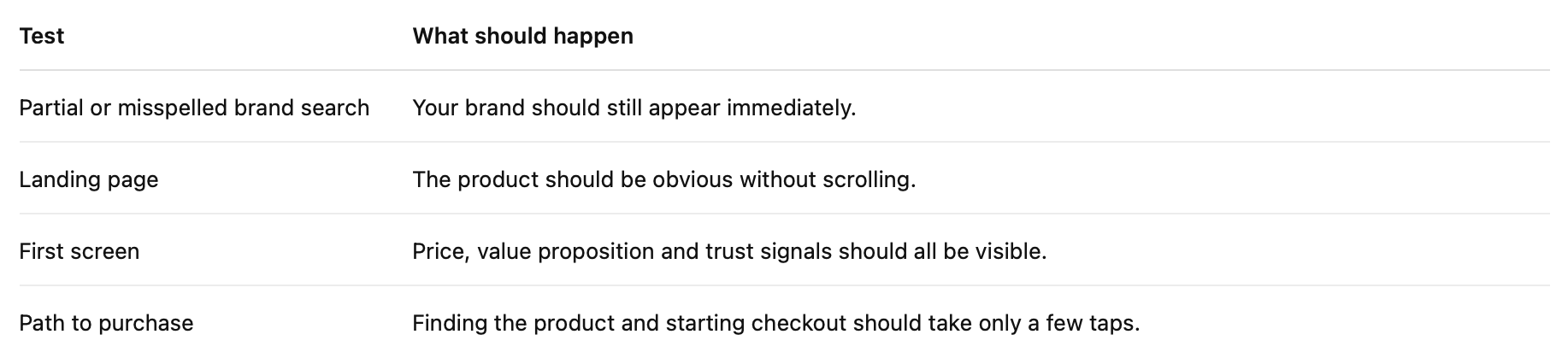
If any of those steps break down, the problem isn’t the TV campaign.
It’s the experience waiting on the other side of the search.
Measuring it at scale
For brands already investing in TV, the next step is confirming that these same-session searches translate into measurable revenue.
PATTERN Beauty used Tatari to measure performance from day one across its campaign, ultimately seeing a 3× revenue lift from month one to month three. See how the same measurement approach can be applied to your next campaign. You can book a free demo and build demand with TV before Q4 gets crowded.
Most TV measurement is still built to explain what happens next week.
The more valuable question is whether your brand is ready for what happens during the commercial break itself, because that’s a test you can run this afternoon with tools you already have open.
🔍 AI Search Is Growing, But So Is The Measurement Problem
New reports from Similarweb and Google Search Console suggest AI search is becoming a meaningful traffic source. But they also show why marketers need to rethink how they measure success.
The Breakdown:
Google Still Leads Search - Similarweb found 95% of ChatGPT users also use Google, while traditional search still attracts around 3.3B monthly users versus 655M across AI chatbots. AI is layering onto search, not replacing it.
AI Traffic Doesn’t Work Like Search - Only 6.8% of ChatGPT responses include external links, yet 58.8% of AI referral traffic lands on homepages instead of the pages being cited. Track citations and referral traffic as separate metrics.
Don’t Trust AI Visibility Alone - Google’s new Search Console reports AI impressions and positions, but they don’t show whether users actually clicked or converted. Visibility without engagement can paint a misleading picture.
Measure Business Outcomes - Rather than chasing AI impressions, marketers should focus on citations, referral traffic, conversions, and revenue. Those metrics reveal whether AI visibility is creating real business value.
AI search is growing quickly, but it’s changing how traffic flows. Brands that separate visibility from actual performance will make better decisions than those relying on surface-level AI metrics.
🗝️ Tweet of the Day

Advertise with Us
Wanna put out your message in front of over 50,000 best marketers and decision makers?
Checkout our Partner Kit here🤝
At Buyology, we care about our readers and want to provide the best possible experience. That's why we always look for ways to improve our content and connect with our audience. It would be amazing if you could hit us up with feedback about our content or absolutely anything, we are always up for a chat 🥰
Thanks for your support, We'll be back with more such content 🥳