
Howdy Readers 🥰
In this newsletter, you’ll find:
🗣️New SEO is getting people talking
📢 Google Ads is giving automation more control
👨💻 Tweet of the day
If you’re new to Buyology then a hearty welcome to you, You’ve reached the right place alongside 50k+ amazing people, Before you forget, if someone forwarded this newsletter to you, don't forget to subscribe to our newsletter so you never miss out!
🗣️New SEO is getting people talking
For years, SEO has rewarded authority built through backlinks. Earn enough high-quality links and search engines gain confidence that your content deserves to rank. AI search is evaluating a different kind of evidence. Instead of asking who links to you, it increasingly asks where else your brand keeps appearing independently.
Those aren’t the same signal.
A site can have exceptional backlink authority and still have very little of the broader reputation AI systems look for when deciding which brands to mention.
Start by measuring presence, not links
Instead of reviewing backlink reports, map how visible your brand is across the places AI systems regularly pull information from.
A simple scorecard works well.
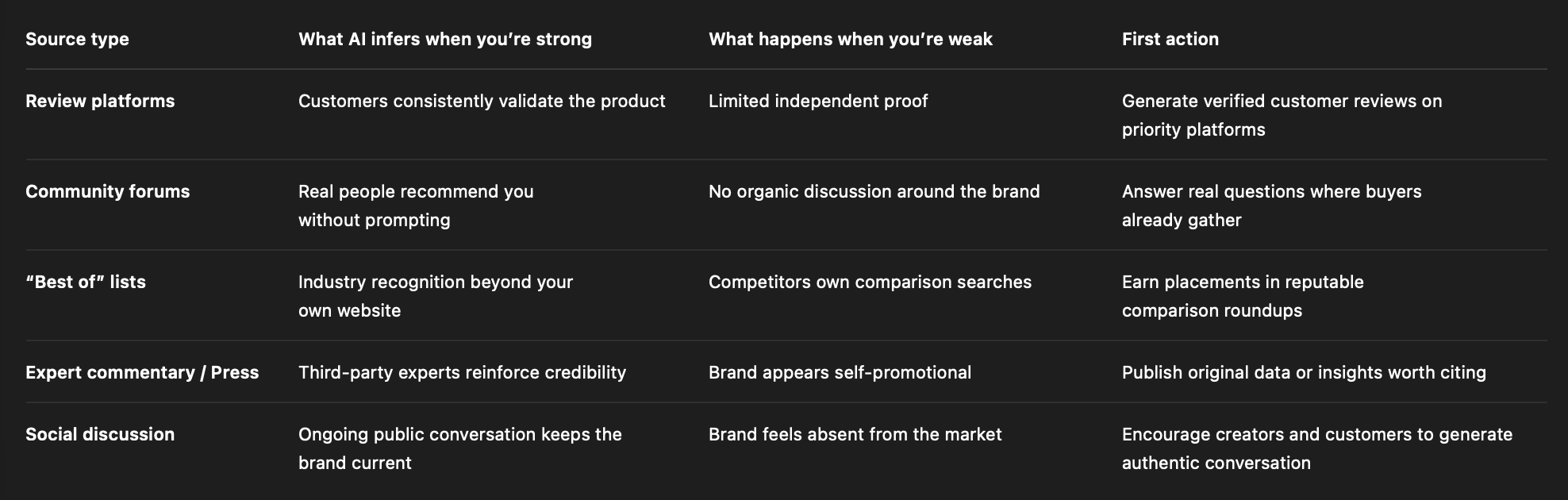
The exercise often explains why a brand ranks well traditionally but rarely appears in AI-generated answers.
Fix the biggest credibility gap first
Not every category carries the same weight.
If your brand is largely absent from review platforms or community discussions, those gaps are usually worth addressing before chasing another backlink campaign.
A brand that earns genuine reviews, participates in relevant communities and builds credible third-party discussion is creating the kind of distributed trust AI systems increasingly recognise. Strengthening those signals often has a greater impact on AI visibility than adding another authoritative backlink to an already strong profile.
Track the mix, not just the outcome
Revisit the scorecard every quarter.
The goal isn’t simply increasing AI mentions. It’s understanding which parts of your external presence are improving and which ones are standing still.
One category moving while another declines requires a very different plan than steady improvement across all five. Measuring category-level progress turns AI visibility from a vague objective into a set of specific priorities.
That’s exactly the comparison Semrush One helps simplify by bringing traditional search performance and AI visibility into the same workflow, making it much easier to spot where strong rankings are masking weak external authority. You can try Semrush One free for 7 days.
A strong backlink profile tells search engines your website is authoritative.
Being discussed consistently across trusted sources tells AI systems your brand is.
Together with Insense
You don’t have a creator problem. You have a workflow problem.

A creator disappears. A shipment stalls. Your paid team waits another week for content while someone tracks contracts and payments across separate tools.
Insense replaces that workflow with one self-serve platform.
One place to receive creator matches from 100,000+ vetted profiles, run briefs, ship product, automate contracts and payments, and own full lifetime content rights.
The results speak for themselves:
Nurture Life cut turnaround time from 2 months to 2 weeks using just one marketer and Insense
Solawave received 180+ ad-ready assets in a single month by simply shipping products
Matys Health achieved 12× reach through Spark Ads on TikTok
More than 3,500 brands use Insense, with first creator applications arriving within 48 hours and teams saving 40+ hours monthly.
Book a free strategy call by August 28 and get $200 platform credits towards your first campaign!
📢 Google ads is giving automation more control
Google is making several changes across Search, Performance Max, and Shopping. The common thread is clear: more decisions are moving from advertiser-controlled settings toward Google’s automated systems.
The Breakdown:
1. Language Control Goes - Campaign-level language targeting disappears from Search in late September. Google will instead use creative language, landing pages, and its own understanding of what languages each user knows.
2. Local Intent Expands - Performance Max can now prioritize people actively looking for nearby businesses across Maps, Waze, and Search. The catch is that Merchant Center feeds and online conversion goals are incompatible with the feature.
3. Policies Get Clearer - Google has rewritten its YouTube and Discover Feed ad requirements for readability. There are no new rules or enforcement changes, so advertisers do not need to modify campaigns.
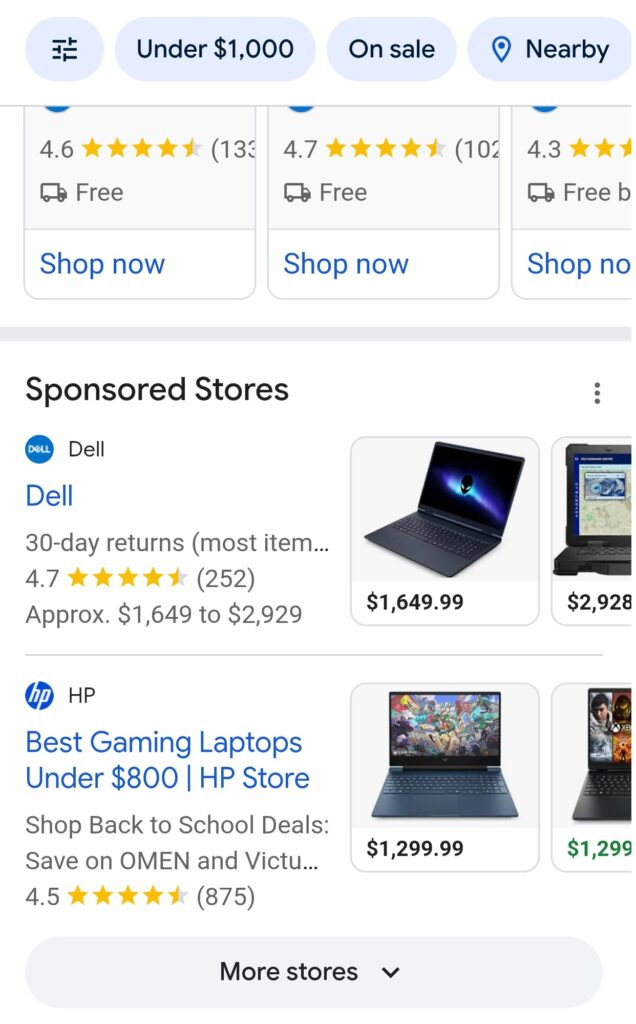
4. “Sponsored” Gets Softer - Google is testing “Featured Store” as a replacement for “Sponsored” on a Shopping ad unit, alongside “Shop these top products.” The placement remains advertising, but the presentation feels more like a recommendation.
Google Ads is gradually reducing explicit advertiser controls while letting automation decide more about eligibility and delivery. For marketers, creative, landing pages, campaign architecture, and Google’s interpretation of intent are becoming increasingly important.
🗝️ Tweet of the Day

Advertise with Us
Wanna put out your message in front of over 50,000 best marketers and decision makers?
Checkout our Partner Kit here🤝
At Buyology, we care about our readers and want to provide the best possible experience. That's why we always look for ways to improve our content and connect with our audience. It would be amazing if you could hit us up with feedback about our content or absolutely anything, we are always up for a chat 🥰
Thanks for your support, We'll be back with more such content 🥳