
Howdy Readers 🥰
In this newsletter, you’ll find:
💪Make objections impossible - The CRO System Most Brands Never Build
📊 AI Max Behavior, Cyber Monday Costs & Google’s New Ad Asset
🚀Tweet of the Day
If you’re new to Buyology then a hearty welcome to you, You’ve reached the right place alongside 50k+ amazing people, Before you forget, if someone forwarded this newsletter to you, don't forget to subscribe to our newsletter so you never miss out!
💪 Make objections impossible - The CRO System Most Brands Never Build
Most PDPs treat proof like decoration. A row of stars, a few testimonials, maybe a UGC carousel if someone remembered. That approach is why “more proof” often stops working. You are not suffering from a lack of proof. You are suffering from unstructured proof.
The better model is this. Proof is not a pile. Proof is a graph.
A graph means every claim on the page is a node, and every node needs a matching proof artifact. If a claim has no proof, the shopper’s brain creates its own proof, and it usually becomes doubt. If a claim has the wrong proof, you get persuasion noise, the feeling that the brand is trying too hard.
This is why seasoned CRO wins come from proof architecture, not proof volume.
Step 1: Convert your PDP into claims, not sections
List the claims your page makes, explicitly or implicitly, in plain language. “Works in 10 minutes.” “Safe for sensitive skin.” “Fits true to size.” “Does not smudge.” “Ships fast.” “Easy returns.” These claims are what the buyer is actually evaluating, not your copy blocks.
Step 2: Assign a proof type to each claim
Different claims require different proof.
Efficacy claims need demonstrations, before-and-after, or quantified results.
Safety claims need certifications, testing language, or expert validation.
Fit claims need creator try-ons, shade matching, or body-type variety.
Convenience claims need operational proof, shipping speed, and returns clarity.
Social claims need volume proof, repeat purchase signals, and community proof.
If you mismatch proof, conversion suffers even when you add more content.
Step 3: Build your Proof Coverage Score
Score each claim 0 to 3. 0 means no proof exists.
1 means weak proof, generic reviews, vague testimonials.
2 means credible proof, relevant artifact exists.
3 means undeniable proof, visually clear, specific, hard to argue with.
Your CRO priority is not “improve PDP.” Your CRO priority is “move the lowest scoring claims to a 2 or 3.”
Step 4: Place proof where the objection forms
Do not dump proof at the bottom. Proof must appear at the moment the doubt appears. Put efficacy proof beside the efficacy claim, fit proof near the variant selector, convenience proof near shipping and returns decisions, and social proof after the buyer understands what the product does.
This reduces cognitive load because the shopper does not have to hunt for reassurance.
Insense is useful here because it helps you generate claim-specific creator proof assets at scale, so your proof graph gets filled with the exact demos and validations your PDP is missing. You can book a free strategy call by December 12th to get $200 towards your first collab!
The real takeaway
Most brands keep adding proof and wondering why conversion plateaus. The plateau happens because the proof is not mapped to the claims that drive doubt.
When you build proof as a graph, every asset earns its place, every objection gets answered, and your PDP becomes a decision engine instead of a content wall.
Together with Wing
Get Back 20+ Hours Every Single Week with Wing

You know the trap. You start Monday with big priorities, and by Wednesday, you’re buried under inbox fires, calendar chaos, vendor follow-ups, and tasks that generate zero lift. Those lost hours add up. So do the missed targets.
There’s a cleaner path. Wing high-performing, trained human virtual assistants who absorb the operational drag and give you back the bandwidth you actually get paid for.
• 20 to 30 hours reclaimed weekly across admin, scheduling, CRM, and research
• 35% faster project cycles because your follow-ups and reporting run on autopilot
• 50% reduction in task switching, freeing you to focus on real work
With 10K+ customers and a 4.9 average rating, it’s built for operators: zero training, zero micromanagement, zero onboarding friction
If you had an extra 20 hours next week, what would you build? What would you finally fix?
Get matched with a high-performing assistant and buy back your time today!
📊 AI Max Behavior, Cyber Monday Costs & Google’s New Ad Asset
This week’s PPC discussion centered on how AI Max interprets intent, how Cyber Monday performance unfolded across Shopping and PMax, and how Google is inserting more AI-generated language into ads.
The Breakdown:
1. AI Max Behavior - Google clarified that match types still guide AI Max, even as it broadens into related intent. Adalysis confirmed wider search-term expansion, reinforcing that account structure, keyword clusters, and guardrails remain essential for steering relevance and maintaining predictable query quality.
2. Holiday Cost Pressures - Cyber Monday trends showed spend rising even as impressions dipped, while CTR increased but ROAS fell. Mike Ryan’s multi-retailer data echoed this: +31% spend, –6% AOV, +12% competition. Strong intent remained, but efficiency dropped, and evening hours drove revenue peaks.
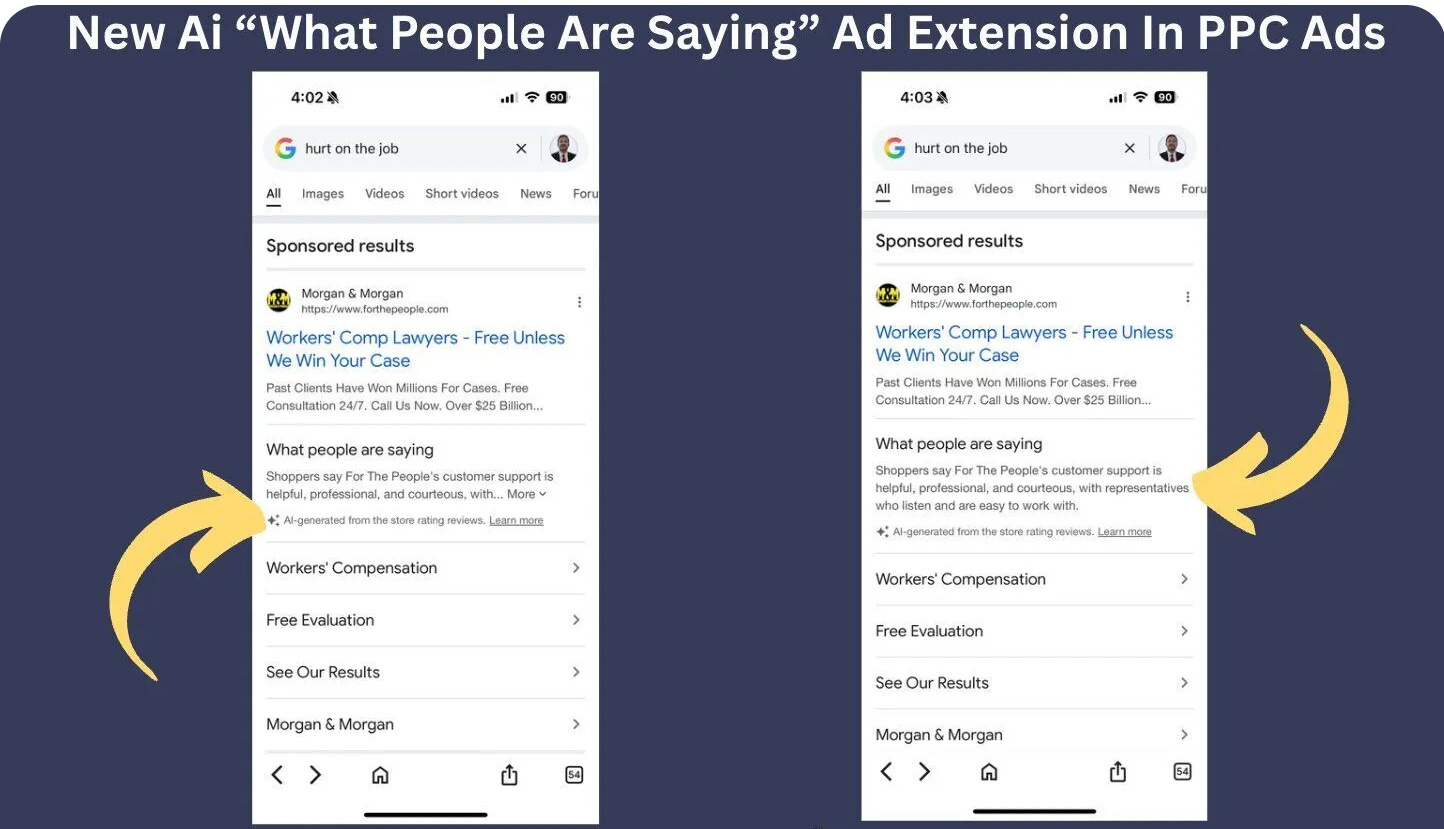
3. New AI Asset - Google is testing a “What People Are Saying” automated asset that generates sentiment-style summaries not directly sourced from advertiser content, raising questions about accuracy and brand control as Google continues inserting AI-written supporting text into ads.
Rising costs demand tighter structures, clearer guardrails, and stronger post-click experiences. AI Max needs intentional inputs to stay relevant, Cyber Monday proved attention is pricey, and Google’s auto-generated assets require careful oversight to protect messaging, control accuracy, and maintain predictable campaign outcomes.
🗝️ Tweet of the Day

Advertise with Us
Wanna put out your message in front of over 50,000 best marketers and decision makers?
Checkout our Partner Kit here🤝
At Buyology, we care about our readers and want to provide the best possible experience. That's why we always look for ways to improve our content and connect with our audience. It would be amazing if you could hit us up with feedback about our content or absolutely anything, we are always up for a chat 🥰
Thanks for your support, We'll be back with more such content 🥳
Brilliant reframe of the social proof problem. The distinction beween proof volume and proof architecture explains why so many high-traffic PDPs still convert poorly despite having tons of reviews and UGC. Treating proof as a graph where each claim needs its matching artifact type is exacty what seperates stores that scale from stores that just add more content. That Proof Coverage Score framework gives teams an actual audit tool instead of another vague "test more proof" directive.