
Howdy Readers 🥰
In this newsletter, you’ll find:
🧐 It ranks high but it’s never cited
🤖 Google and Meta upgrade advertiser control
👨💻 Tweet of the day
If you’re new to Buyology then a hearty welcome to you, You’ve reached the right place alongside 50k+ amazing people, Before you forget, if someone forwarded this newsletter to you, don't forget to subscribe to our newsletter so you never miss out!
Together with Omnisend
10 ways your favorite AI can improve email marketing

What if we told you that in under 30 seconds, you can see your subscriber growth trends and your latest campaign activity without opening a single dashboard?
That’s one of 10 ways Omnisend’s new guide puts your AI to work. Others pinpoint which email in your welcome flow earns the most, catch rising bounce rates before they cost you opens, or hand you a lapsed-buyer segment with the email already drafted.
There is no new chatbot or separate AI platform to learn. Omnisend connects directly with ChatGPT and Claude, so you can ask questions about your campaigns, automations, and subscribers inside the AI tools you already use.
Haven’t used Omnisend before? More than 150,000 ecommerce brands use it for email and SMS marketing, and they average $79 back for every $1 spent.
Migration is free, takes up to five business days, and plans cost up to 35% less than Klaviyo’s.
🧐 It ranks high but it’s never cited
A page can rank on the first page of Google and still never appear inside an AI Overview.
That isn’t a contradiction anymore.
Google’s AI Overviews now appear on 43% of searches, up from 15% a year ago, but the pool of pages actually being cited hasn’t expanded at the same pace. Ranking and citation are increasingly becoming two different measures of success, which means a page can perform well in traditional search while contributing almost nothing to AI visibility.
The page is being judged relevant. It just isn’t being judged worth quoting.
A ranking problem and a citation problem aren’t the same thing
When a page ranks but never gets cited, the issue often isn’t SEO.
It’s extractability.
Three changes are worth checking before assuming anything more complicated is wrong.
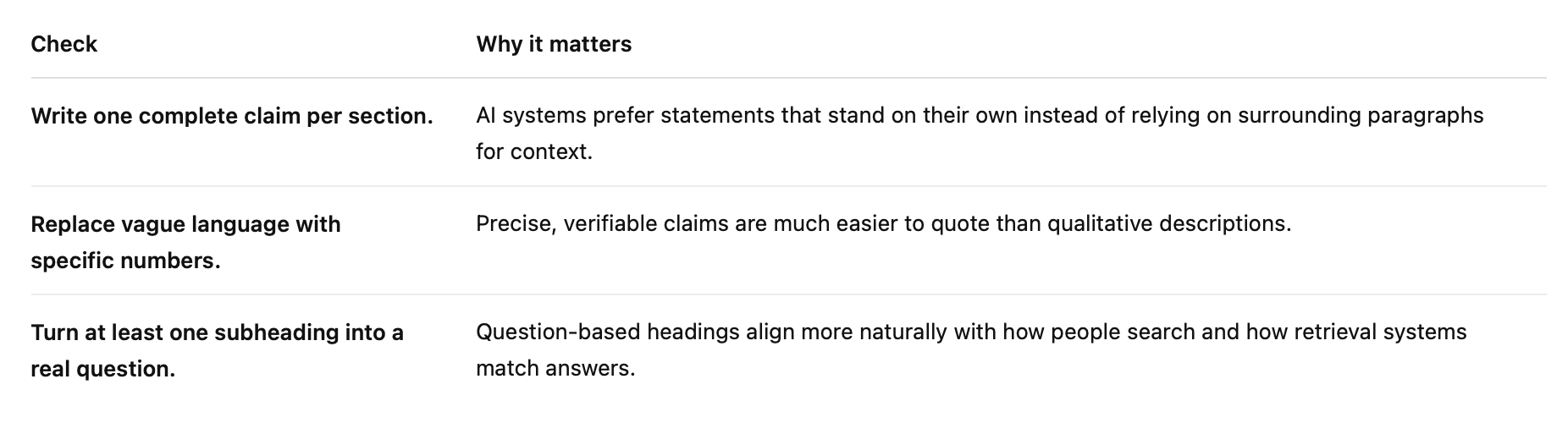
None of these require rewriting the entire page.
They simply make useful information easier to extract.
A page saying “our process is significantly faster” gives an AI system very little to quote. A page stating “the process reduced completion time by 40% in independent testing” creates a specific, attributable claim that can stand on its own.
The same principle applies to structure. If the answer to a common question is spread across several paragraphs, the model has to reconstruct the argument before it can cite it. When the answer exists as a single, complete idea beneath a clear question heading, retrieval becomes much easier.
Look for the pages already solving the problem
Before changing underperforming pages, study the ones already earning citations.
If lower-ranking pages consistently appear in AI answers, they’re often demonstrating patterns worth copying across the rest of the site. Reverse-engineering successful pages is usually faster than redesigning weaker ones from scratch.
Doing that across an entire website requires ranking data and AI citation data in the same place instead of manually comparing exports every month.
That’s exactly what Semrush One is designed for, combining traditional rankings, AI visibility and competitive gap analysis so you can see which prompts competitors consistently win and which opportunities your site is missing. You can try Semrush One free for 7 days.
A page that ranks but never gets cited isn’t telling you your SEO failed. It’s telling you your knowledge is difficult to extract, and those are two very different problems.
🤖 Google and Meta upgrade advertiser control
Google is making campaign analysis more conversational and automated, while Meta is adding stronger controls over who advertisers can exclude from campaigns.
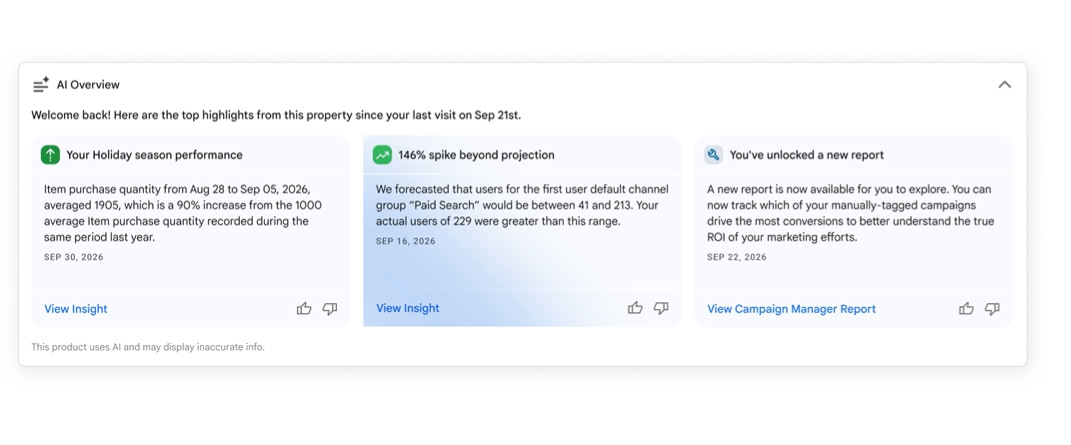
The Breakdown:
1. Google turns data into answers - Ask Advisor now lets marketers question Ads and Analytics data conversationally, uncovering campaign trends, competitor effects, traffic changes, and potential next steps without manually digging through reports.
2. AI builds reports automatically - Analytics AI Overviews summarize important performance changes, while new Ads Dashboards turn text prompts into visual reports with AI explanations. Analytics Dashboard support is coming soon.
3. Meta introduces exclusion-only audiences - Meta’s new exclusion-only custom audiences permanently prevent selected users from receiving ads. They cannot be used for inclusion targeting or converted into regular custom audiences later.
4. Stronger guardrails for automated targeting - Advertisers can exclude opt-outs, legally restricted audiences, employees, or other unwanted groups. This reduces wasted spend while creating safeguards against accidental targeting as Meta increasingly automates delivery.
Google is automating how marketers understand performance, while Meta is strengthening boundaries around automated targeting. Together, advertisers get faster analysis without completely surrendering campaign control.
🗝️ Tweet of the Day

Advertise with Us
Wanna put out your message in front of over 50,000 best marketers and decision makers?
Checkout our Partner Kit here🤝
At Buyology, we care about our readers and want to provide the best possible experience. That's why we always look for ways to improve our content and connect with our audience. It would be amazing if you could hit us up with feedback about our content or absolutely anything, we are always up for a chat 🥰
Thanks for your support, We'll be back with more such content 🥳