
Howdy Readers 🥰
In this newsletter, you’ll find:
👎 You Spent 45 Minutes on the Hook. The Middle Killed the Post in 10 Seconds.
📱 Snapchat, Instagram, and Pinterest All Made Moves on Engagement This Week
🚀Quick Hits
If you’re new to Buyology then a hearty welcome to you, You’ve reached the right place alongside 50k+ amazing people, Before you forget, if someone forwarded this newsletter to you, don't forget to subscribe to our newsletter so you never miss out!
Together with Tatari
The Brands Winning Right Now Didn’t Crack Meta. They Moved Past It.

You’ve seen the case studies. You know TV works for the big guys. What nobody told you is the barrier to entry dropped, the measurement got real, and the brands hitting their CAC targets right now aren’t enterprise, they’re DTC brands your size.
Tatari is a TV buying platform that lets you run across linear TV, streaming, and direct publisher buys, all from one place.
You see exactly where every ad aired, so nothing is hidden, and nothing is wasted. And every dollar ties back to actual site visits, signups, and revenue not impressions that look good and prove nothing.
Aroma360 cut CPA by 80% and doubled ROAS from a $14K linear pilot
Fiverr retargeted Super Bowl viewers on streaming and slashed CAC by 75%
Saatva saw a 40% lift in branded search from their very first Tatari test
Over 400 brands already run TV this way. The ones who waited are still running the same Meta playbook, wondering why CAC keeps climbing.
Book a free demo and get a launch-ready TV plan built around your numbers.
👎 You Spent 45 Minutes on the Hook. The Middle Killed the Post in 10 Seconds.
Here’s the quiet performance killer nobody in the content room is diagnosing correctly.
The hook gets workshopped. Tested against three variations. Rewritten four times until it’s sharp enough to stop a scroll. Then the body gets written in one sitting, treated like a hallway between the opener and the CTA, something to get through, not somewhere to actually take people.
That hallway is where the post dies. Not dramatically. Just quietly, somewhere around paragraph three, when the reader realises nothing after that brilliant opener had a reason to exist.
Why does the middle keep failing?
The body isn’t filler. It’s where the trust transaction either completes or collapses. A hook creates a debt, an implicit promise that what follows is worth the attention it just demanded. The middle is where that debt gets paid or defaulted on.
Strong body copy does three things simultaneously:
Inherits the tension from the hook and keeps pulling it forward rather than releasing it too early
Moves, each point creates a small question, the next one answers, never letting the reader feel like they’ve arrived somewhere final
Makes the CTA feel like a conclusion the content was always building toward, rather than an interruption that showed up uninvited
Five things worth doing differently.
Write the middle first. When thinking is sharpest, write the body. Then write a hook specifically for that body. The result is an opener that makes the specific content underneath it unavoidable rather than a generic hook attached to generic content.
Give every paragraph one job. Introduce tension, build it, or release it. If a paragraph isn’t doing one of those three things explicitly, it’s decoration. Cut it or reassign it before publishing.
Run the “so what” test on every point. After each point, ask, ‘What does this mean for the reader right now?’ If the answer takes more than one sentence, the point isn’t ready. This single question kills the vague insight problem that makes educational content forgettable.
Manufacture micro-tension deliberately. The best body copy doesn’t resolve everything at once. It opens a small loop, closes it, and opens another. Readers don’t exit mid-paragraph when they’re waiting for a resolution. This isn’t manipulation; it’s how narrative works at the sentence level.
Match the body’s energy to the hook’s promise. A provocative hook followed by a cautious, caveat-heavy body makes readers feel misled even when nothing was technically false. A data-led hook followed by vibe-driven reasoning produces the same effect. Mismatch between hook energy and body energy is a trust violation the reader feels before they can name it.
The edit that reveals everything.
After finishing the next draft, ignore the hook entirely on the first reread. Start from the second paragraph. Ask three questions: does each point move the reader somewhere new, can any section be skipped without losing the thread, and does the CTA feel earned by everything that came before it?
A yes to the second question anywhere is the edit. The hook was never the problem.
The middle just never did its job.
📱 Snapchat, Instagram, and Pinterest All Made Moves on Engagement This Week
Three platforms dropped updates around how users connect, consume, and interact. each pointing to a different theory of what keeps people coming back.
The Breakdown:
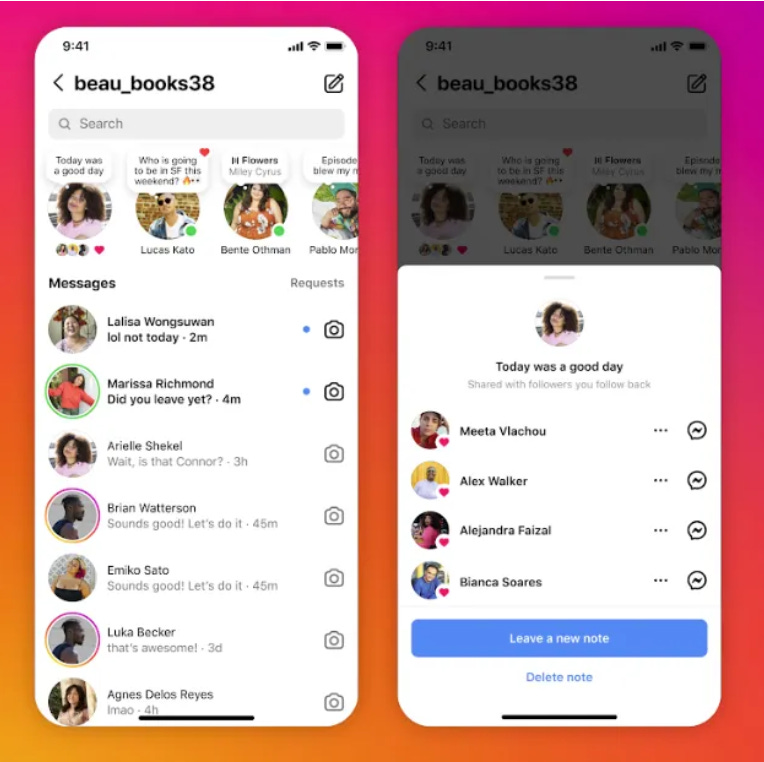
1. Instagram Is Expanding Notes to All Followers – Instagram is testing Notes visibility beyond mutual follows, opening them up to your full follower list. Think tiny Post-it speech bubbles in the inbox; more reach could make them a lightweight broadcast tool, or they just get ignored harder.
2. Reposting to Stories Does Nothing - Adam Mosseri confirmed that resharing a feed post to Stories does not boost reach. Feed already outperforms Stories, so reposting changes nothing. Pattern-match what already works and lean into it harder instead.
3. Snapchat’s March Madness Chat Went Massive – The March Madness Topic Chat drew 45,000 Snapchatters, with 40,000 active simultaneously at peak and over 90,000 messages sent. Fans gathered in one shared space instead of scattering reactions across feeds and comment sections.
4. Pinterest Avoids Repetitive Feeds on Purpose - Pinterest’s recommendation engine deliberately avoids showing too much of the same content. Show people one interest on repeat, and the feed goes stale, so diversification is an intentional engineering decision, not a side effect.
Snapchat’s Topic Chat data is the most interesting signal here. Real-time, moderated group conversation around live events is clearly something users want, and if it sticks, it changes how brands think about placement on the platform.
Together with The Shift
The AI Newsletter Built For People Who Actually Use AI

Many AI newsletters are interesting. Very few are useful.
The Shift is built for execution, not curiosity.
Every edition shows you exactly how you can use AI right now to save hours, reduce costs, or replace entire workflows. No theory, no tool dumps, no trend watching.
You get practical breakdowns, daily copy-paste prompts, simple systems, and access to over 3,000+ vetted AI tools and a tried and tested Prompts Library (500+ Prompts)
So you can apply everything immediately. If AI is part of your work, but still feels underutilized, this newsletter fixes that.
Subscribe to The Shift. It’s free!
🗝️ Tweet of the Day

Advertise with Us
Wanna put out your message in front of over 50,000 best marketers and decision makers?
Checkout our Partner Kit here🤝
At Buyology, we care about our readers and want to provide the best possible experience. That's why we always look for ways to improve our content and connect with our audience. It would be amazing if you could hit us up with feedback about our content or absolutely anything, we are always up for a chat 🥰
Thanks for your support, We'll be back with more such content 🥳