
Howdy Readers 🥰
In this newsletter, you’ll find:
📢 ChatGPT just became a media buy, and nobody’s briefed it yet
📊 Google makes testing and tracking easier
👨💻 Tweet of the day
If you’re new to Buyology then a hearty welcome to you, You’ve reached the right place alongside 50k+ amazing people, Before you forget, if someone forwarded this newsletter to you, don't forget to subscribe to our newsletter so you never miss out!
Together with Omnisend
They migrated a client weeks before Black Friday. It made $113K.

Weeks before Black Friday, one deliverability issue or broken automation can put months of revenue planning at risk. Ecom2Win still chose that moment to move a client to Omnisend.
The migration was completed before BFCM, and the client generated $113K during the holiday period, matching the previous year’s revenue.
Omnisend gave the team a faster and more affordable path forward:
Migrate for free in up to five business days.
Cut platform costs by up to 35% compared with Klaviyo.
Generate more from email and SMS, with brands averaging $79 for every $1 spent.
More than 150,000 ecommerce brands already use Omnisend, giving teams proven infrastructure for their highest-pressure sales periods.
Nearly one in six ecommerce brands earns at least 30% of its annual orders during this period. If your current platform is slowing execution or draining budget, carrying it into another peak season could be the bigger risk.
📢 ChatGPT just became a media buy, and nobody’s briefed it yet
OpenAI opens ChatGPT ads to 31 European markets today, extending a business that launched in the US six months ago. European advertisers buy initially through major agency groups, with self-serve access coming later.
OpenAI has shifted most of that spend to cost-per-click buying, and says roughly 20% of ChatGPT queries carry direct commercial intent, with more queries signaling upper-funnel purchase interest without stating it outright.
That’s not a small ad platform quietly finding its footing. It’s a conversational surface with hundreds of millions of weekly users turning into a paid channel with real buying intent, and most growth teams have no brief written for it because there was nothing to brief until now.
Treat conversational intent as its own creative problem, not a search headline shrunk to fit
A Google search query and a ChatGPT prompt asking the same underlying question look nothing alike. “Best running shoes for flat feet” is a search query.
“I have flat feet training for a half marathon, what should I look for in a shoe” is a ChatGPT prompt, and it already contains the qualifiers, the use case, and half the objection-handling a search ad normally earns through extensions.
Pull your last month of ChatGPT-shaped queries from your own customer service or on-site search data, if you have anything approximating them.
Write ad copy answering the qualifiers already embedded in the question, rather than repurposing a headline built to compress intent that’s already spelled out.
Separate the 20% from the 80% before spending against either
Direct commercial intent and upper-funnel signal are different audiences with different economics, and OpenAI’s own numbers show the second group is the larger one.
If self-serve is still limited or agency-only in your market, use the runway to build two creative tracks now: one for buying-intent, priced like a conversion channel, one for upper-funnel, measured on assisted outcomes. Teams waiting for self-serve build both under launch pressure instead of ahead of it.
Watch where the CPC pricing shift leads next
A channel that moved most of its spend to cost-per-click is behaving like a platform feeling out its auction dynamics in public, the same trajectory paid search and social both followed early on.
Track CPC trends here the way you’d track a new platform’s early CPMs: expect volatility, expect compression as more advertisers enter, and expect whatever format wins early to get copied fast. Being in the auction during the volatile early period is worth more than the spend itself.
The 20% commercial-intent number is the headline. The 80% still deciding is where the actual opportunity sits, mostly because nobody’s built for it yet.
📊 Google makes testing and tracking easier
Google is tightening up both sides of campaign optimization: advertisers are getting better ways to test major Search changes, while conversion tracking is becoming much easier to set up and manage.
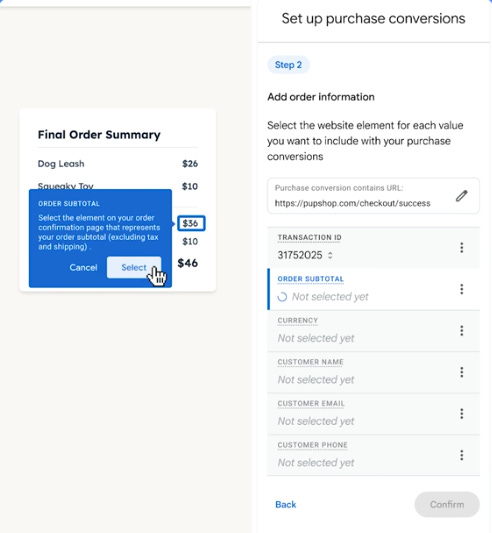
The Breakdown:
Google tag and Tag Manager are merging - Existing Google tags will become fully capable Tag Manager containers, bringing tagging, debugging, version control, and destination management into a more unified setup.
Conversions without code - New visual tagging lets advertisers navigate their website and select actions they want to track. Google handles the selectors and triggers behind the scenes, reducing the need for developer work.
Test changes across campaigns - Starting in September, advertisers can A/B test different budgets and ROI targets across multiple Search campaigns at once, making it easier to measure the wider impact before scaling changes.
AI Max keeps its guardrails - Experiments can now run with brand and location controls enabled, so advertisers can test AI Max under the same restrictions they would actually use in live campaigns.
Google wants more advertisers using automation, but it’s also removing two reasons to hesitate. You can test AI-driven changes without dropping important controls, and you can build the measurement needed to judge those changes without wrestling with code.
🗝️ Tweet of the Day

Advertise with Us
Wanna put out your message in front of over 50,000 best marketers and decision makers?
Checkout our Partner Kit here🤝
At Buyology, we care about our readers and want to provide the best possible experience. That's why we always look for ways to improve our content and connect with our audience. It would be amazing if you could hit us up with feedback about our content or absolutely anything, we are always up for a chat 🥰
Thanks for your support, We'll be back with more such content 🥳