
Howdy Readers 🥰
In this newsletter, you’ll find:
🎯An aimless start hits the right spots
📢 Google Ads Editor Gets Major AI Upgrade
If you’re new to Buyology then a hearty welcome to you, You’ve reached the right place alongside 50k+ amazing people, Before you forget, if someone forwarded this newsletter to you, don't forget to subscribe to our newsletter so you never miss out!
🎯An aimless start hits the right spots
A woman rambling, unscripted, mid-thought, mid-tangent, no product, no pitch, pulled 136,000 views and nearly 700 comments purely because people wanted to attach something to it.
That’s the tell worth noticing: nobody could say exactly what the clip was about, and that’s precisely why so many people found a reason to engage with it.
A scripted ad commits to one meaning the moment it’s written.
The hook states a claim, the body supports it, the CTA closes it, and that specificity is the entire point of a finished ad. Until it’s time to make a second, the same footage can’t say anything else, because it already said the one thing it was built to say.
Raw, unscripted footage never made that commitment. The same clip of someone genuinely reacting, genuinely explaining, genuinely mid-thought can be recut with an entirely different caption, voiceover, or framing and become a different ad each time, because the raw material never closed off which meaning it was going to carry.
This is a reusability property, not just an authenticity one.
The value of ambiguous raw content isn’t only that it feels more real; it’s that its lack of narrative closure is what lets one piece of footage become the source for several genuinely distinct concepts, targeting different objections or angles, without a second shoot.
A finished, scripted ad is a single-use asset by design. An open, undirected clip is closer to raw material with several finished products still latent inside it.
The practical filter for judging raw footage before it’s edited: does this clip already resolve into one specific claim, or could three different captions turn it into three different ads.
Footage that only supports one obvious cut is closer to a finished ad already, valuable once. Footage flexible enough to carry several unrelated framings is the more valuable source material, valuable repeatedly.
Insense sources exactly this kind of raw, unscripted footage, 20-plus clips per creator with lifetime usage rights, material that hasn’t been pre-committed to one meaning, so it can be cut into several genuinely different concepts instead of one finished ad used once. You can book a free strategy call and get $200 toward your first campaign.
Together with Tatari
When Meta hits a ceiling, the smartest brands look beyond it.

Scaling digital used to be straightforward. Now brands hit a Meta Ceiling where reach stalls and CAC skyrockets.
The brands still compounding aren’t fixing it inside Meta. They’re diversifying.
Tatari is a TV buying platform that lets you run across linear TV, streaming, and direct publisher buys, all from one place.
You see exactly where every ad aired, so nothing is hidden, and nothing is wasted. Every dollar ties back to actual site visits, signups, and revenue not impressions that look good and prove nothing.
Aroma360 cut CPA by 80% and doubled ROAS from a $14K linear pilot
Fiverr retargeted Super Bowl viewers on streaming and slashed CAC by 75%
Saatva saw a 40% lift in branded search from their very first Tatari test
Every week you wait is a week someone in your category is pulling customers you could have reached first.
Book a free demo and get a launch-ready TV plan built around your numbers.
📢 Google Ads Editor Gets Major AI Upgrade
Google has launched Ads Editor 2.13, bringing many of its newest AI-powered advertising features to its offline campaign management tool.
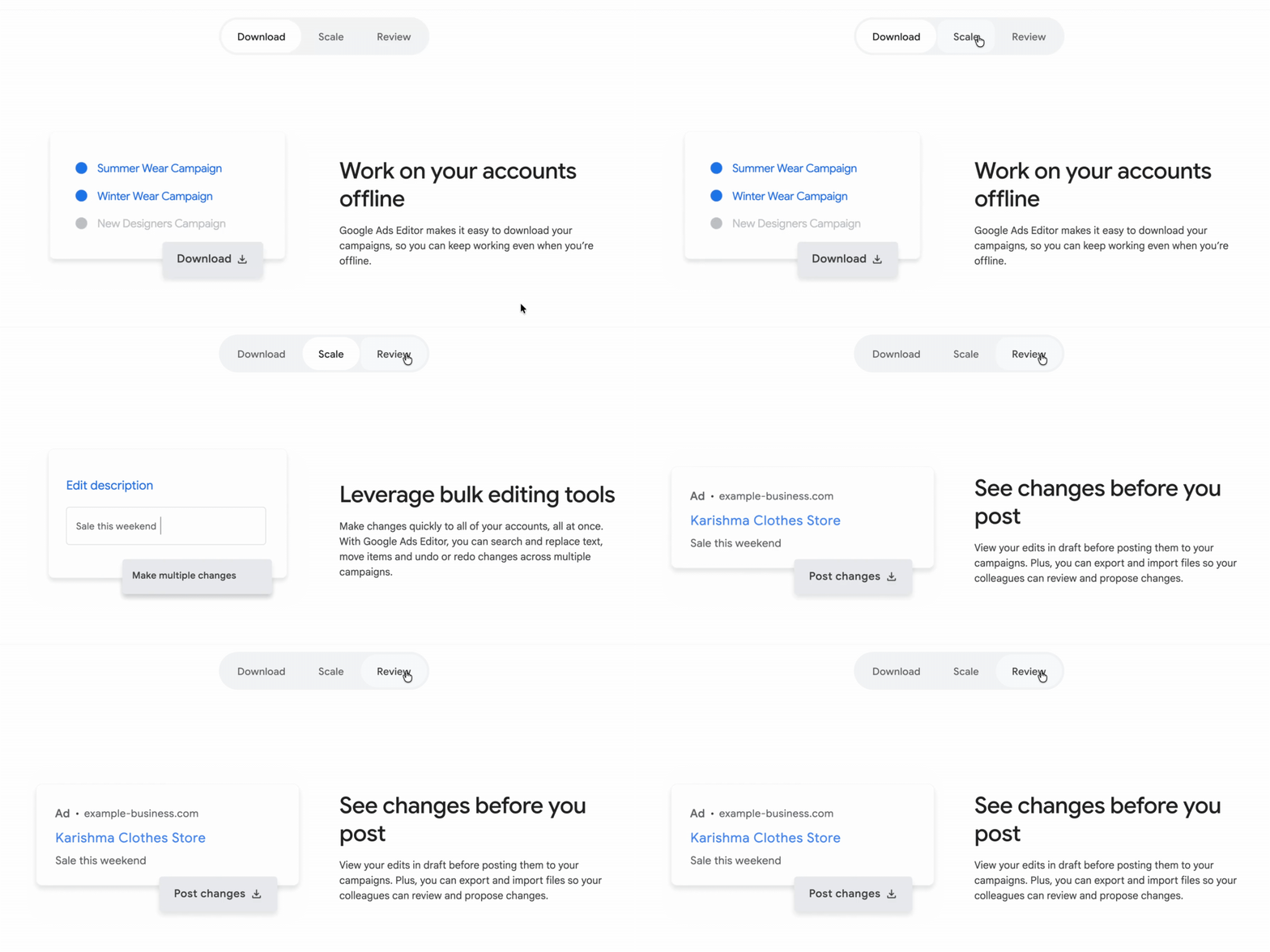
AI Max Comes To Shopping: Advertisers can now manage AI Max for Shopping campaigns directly in Ads Editor, including automated text generation, URL expansion controls, brand lists, and URL exclusions without returning to the web interface.
Performance Max Adds Retention Goals: The update introduces Customer Retention Goals for Performance Max campaigns, allowing advertisers to optimize specifically for re-engaging existing customers.
Demand Gen Gets More Capabilities: Demand Gen campaigns now support Google Maps placements, while responsive and non-skippable video ads gain new Business Name and Business Logo fields for stronger branding.
More AI And Reporting Tools: Ads Editor now includes Channel Performance reporting, AI-generated content disclosure controls, workflow improvements, and officially removes support for creating new Video Action campaigns as Google completes the shift to Demand Gen.
Why It Matters
Google is bringing nearly all of its latest AI advertising capabilities into Ads Editor, making it easier for advertisers managing campaigns at scale to adopt new features without leaving their offline workflow.
🗝️ Tweet of the Day

Advertise with Us
Wanna put out your message in front of over 50,000 best marketers and decision makers?
Checkout our Partner Kit here🤝
At Buyology, we care about our readers and want to provide the best possible experience. That's why we always look for ways to improve our content and connect with our audience. It would be amazing if you could hit us up with feedback about our content or absolutely anything, we are always up for a chat 🥰
Thanks for your support, We'll be back with more such content 🥳