
Howdy Readers 🥰
In this newsletter, you’ll find:
😬 AI Crawled Your Site Three Times This Week. It Found Nothing Worth Citing.
📺 YouTube and Snapchat Are Both Pushing Harder on Ad Formats This Week
🚀Tweet of the Day
If you’re new to Buyology then a hearty welcome to you, You’ve reached the right place alongside 50k+ amazing people, Before you forget, if someone forwarded this newsletter to you, don't forget to subscribe to our newsletter so you never miss out!
😬 AI Crawled Your Site Three Times This Week. It Found Nothing Worth Citing.
Picture two versions of the same webpage loading simultaneously.
A human opens it and sees everything, product descriptions, social proof, and a hero section, making the core value proposition impossible to miss. An AI crawler arrives at the exact same URL a fraction of a second earlier and sees a navigation bar, a footer, and empty containers where the content was supposed to be.
Same domain. Same URL. Completely different experience. And the version determining whether the brand gets cited in AI-generated answers is the one the team has never actually looked at.
The execution gap nobody on the dev team was told to worry about.
AI crawlers operate differently from human browsers in one critical way: they don’t wait. JavaScript executes after the initial HTML loads, which means anything rendered dynamically, product descriptions, hero copy, pricing, and reviews pulled from third-party widgets simply don’t exist at the moment the crawler reads the page and leaves.
The crawler didn’t miss the content. The content hadn’t arrived yet.
This isn’t an edge case affecting a handful of outdated sites. Roughly 30% of sites have business-critical content living exclusively in the post-JavaScript execution layer. Every one of those sites is effectively invisible to AI systems for the queries that matter most, the buying-intent searches, where getting cited means getting chosen.
Competitors aren’t winning those citations through better content or stronger authority. They’re winning because their content was physically present when the crawler came looking.
Where to start without rebuilding anything from scratch.
The fix is more targeted than the problem sounds. A full technical overhaul isn’t necessary, what’s needed is a precise audit of which pages are affected and which content types are living in the execution gap.
Three categories consistently show up as the highest-impact fixes:
Product and category pages, the pages AI pulls from when constructing answers to commercial queries, often built entirely in JS frameworks that render nothing at crawl time
Hero sections and value propositions, the content that should be doing the heaviest lifting in establishing what the brand does and why it matters, frequently invisible to crawlers
Social proof and reviews, third-party widgets that load after render, meaning the crawler finds a placeholder div and none of the trust signals it was supposed to contain
Moving these specific content types to static HTML closes the visibility gap permanently. Not a rebuild. A targeted migration of the content that matters most to the format crawlers can actually read.
Getting seen is step one. Getting cited is a different problem entirely.
A technically accessible site gets crawled. A citable site gets retrieved and referenced in AI-generated answers, and those two outcomes require completely different strategies.
AI answers don’t surface pages that rank well. They retrieve passages that signal trust, topical authority, and relevance at a granular level.
Join AirOps on April 15 at 2 PM EST for a live session with Eli Schwartz, Growth Advisor, Author of Product-Led SEO, and the strategist behind billions in organic revenue for Coinbase, LinkedIn, and Tinder, breaking down the exact framework for how AI retrieval works in 2026 and the four pillars determining whether content gets cited or skipped.
You can register it for free. Recording available within 24 hours.
The brand wasn’t forgotten. AI visited, found empty containers, and cited whoever had something worth reading.
The question is what it finds the next time it arrives.
Together with Omnisend
Email marketing that doesn’t need your attention.

Email marketing doesn’t need to take your breath away. Actually, it shouldn’t. As a business owner, you have enough “exciting” stuff happening.
Let Omnisend be the reliable, stable, and effective platform you don’t need to worry about.
No guessing if that campaign pays off. Brands using Omnisend on average make $79 for every $1 spent.
No need to learn anything new. It’s a platform so intuitive, it’s like you designed it.
No unwanted adventures. Their support team is available 24/7 to help you.
Over 150,000 brands already trust Omnisend - and 69% of their revenue runs on autopilot through automations they set once, with 17.3% higher CTRs to show for it.
You’re up and running in 30 minutes. Fully migrated in 5 days.
📺 YouTube and Snapchat Are Both Pushing Harder on Ad Formats This Week
Both platforms made moves around ad experiences this week. YouTube is quietly testing 90-second unskippable ads on connected TV screens, while Snapchat is making a renewed push for Snapcodes as a serious marketing tool for brands.
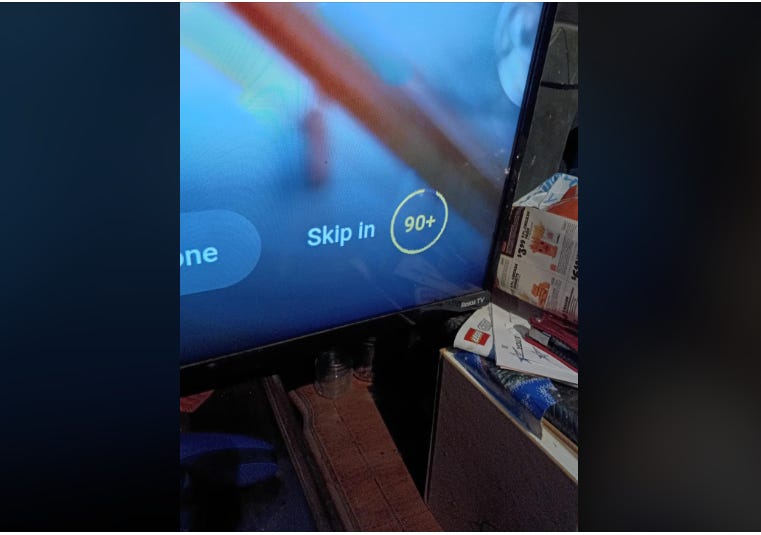
The Breakdown:
1. YouTube Tests 90-Second CTV Ads - YouTube is testing 90-second unskippable ads on connected TV sets, spotted inside a 40-minute video by a Reddit user. The current official maximum sits at 60 seconds, and YouTube has not commented on the test.
2. A Separate Format From Ad Blocker Penalties - This is not YouTube’s punishment ad blocks that trigger on ad blocker detection. These 90-second ads are a standalone experiment measuring how much CTV viewers will actually tolerate.
3. Snapchat Is Pitching Snapcodes Again - Snapchat is actively promoting Snapcodes, its branded QR codes available since 2017, as a stronger alternative to generic QR generators. Brands can embed logos, link to AR experiences, and access deeper analytics.
4. Real World Use Cases Already Exist - Snap shared examples including retail storefronts offering AR try-ons on scan, product packaging linking to interactive content, and TV commercials directing viewers straight to trailers or sign-up pages.
YouTube watches over a billion hours of content on TV sets daily, making longer ad breaks a natural next step if users don’t push back. Snapcodes are the more niche play, but worth a look for brands targeting younger audiences.
🗝️ Tweet of the Day

Advertise with Us
Wanna put out your message in front of over 50,000 best marketers and decision makers?
Checkout our Partner Kit here🤝
At Buyology, we care about our readers and want to provide the best possible experience. That's why we always look for ways to improve our content and connect with our audience. It would be amazing if you could hit us up with feedback about our content or absolutely anything, we are always up for a chat 🥰
Thanks for your support, We'll be back with more such content 🥳