
Howdy Readers 🥰
In this newsletter, you’ll find:
💃 Being cited by AI isn’t the win anymore
🤖 AI search is changing how brands get found
👨💻 Quick hits
If you’re new to Buyology then a hearty welcome to you, You’ve reached the right place alongside 50k+ amazing people, Before you forget, if someone forwarded this newsletter to you, don't forget to subscribe to our newsletter so you never miss out!
💃 Being cited by AI isn’t the win anymore
The bigger question is how often you’re being cited.
Recent analysis of AI Overviews shows the top 1% of cited domains now account for 47% of all citations. That concentration has remained remarkably stable since Google’s January shift to Gemini 3, even though many of the domains appearing in AI Overviews changed during the transition.
The scope became broader. The rewards became narrower.
That’s an important distinction because many teams still measure AI visibility as a binary outcome: “Were we cited?” The data suggests that’s no longer enough.
A citation isn’t the same as citation share
Think about two brands.
Brand A appears once across one hundred relevant AI answers.
Brand B appears forty times across the same set of queries.
Both can claim they’re “being cited.”
Only one is becoming part of the model’s default answer. That’s the metric worth chasing.
Measure concentration, not presence
Instead of reporting the number of citations, track how your brand’s citation share changes over time. A simple review every month should answer three questions:
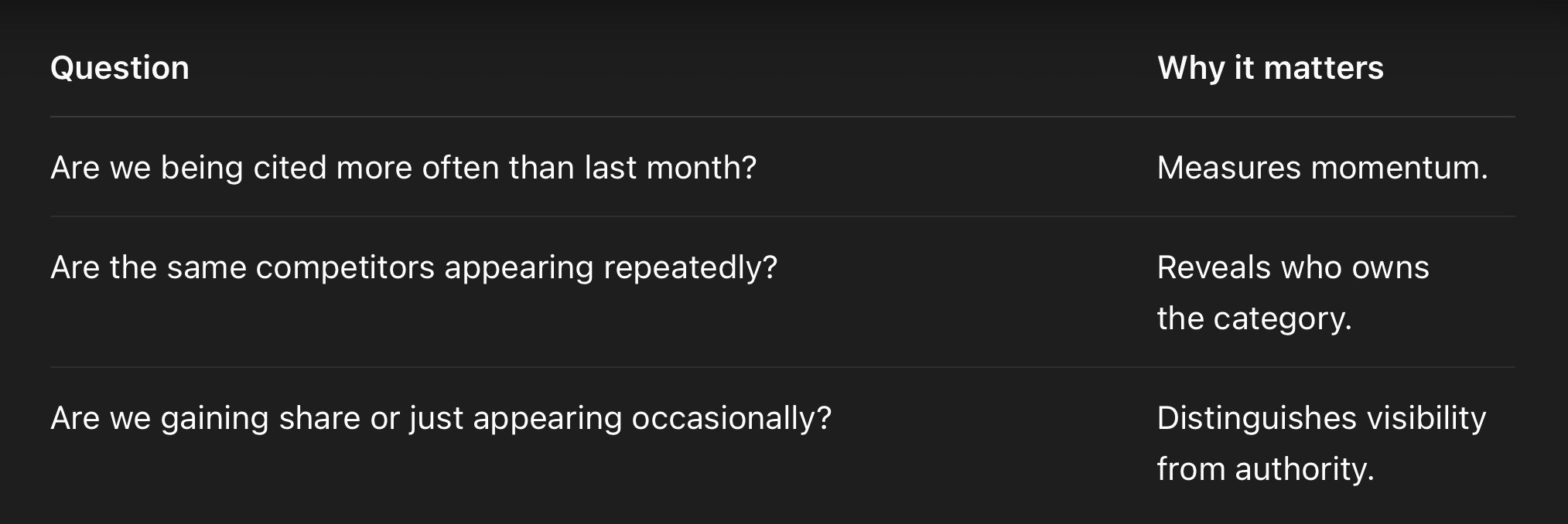
The difference is subtle but important.
Growing from five citations to ten matters far less if the category leader grew from one hundred to two hundred over the same period.
Build for repeated selection
Large language models increasingly reward sources they trust repeatedly, not just sources that answer one question well.
That means the objective isn’t publishing one page that earns one citation.
It’s building enough topical depth that your domain keeps being selected across dozens of related questions, gradually increasing its share rather than collecting isolated mentions.
That’s exactly why AirOps’ State of AEO 2026 focuses on citation patterns instead of rankings alone. The report breaks down how citation concentration has changed, which signals correlate with repeated AI visibility and where brands are gaining or losing share as AI search evolves. You can get the report here.
The next phase of AI search won’t be decided by whether your brand gets cited.
It will be decided by how much of the conversation your domain consistently owns.
Together with Insense
Combining UGC with paid ads gave Maty’s 12x more reach. Here’s the mechanic.

Most brands treat organic content and paid ad creative as two separate jobs, different briefs, different creators, twice the work for what’s really one story.
Insense is built for both sides: source creators for organic content, and once a piece is already proving itself, repurpose it into paid ad creative through Partnership Ads or Spark Ads no new sourcing cycle, just activating what’s already working.
Maty’s used exactly this: creator content that ran organically and was repurposed into TikTok Spark Ads lifted reach 12x, with a 4x higher CTR than branded content alone.
Source from 100,000+ vetted creators, get content back with lifetime content usage rights, and go from brief to delivered assets in weeks.
Trusted by Strawberry.me, Bending Spoons, Wellhub, PetLabCo, and 3,500+ brands are using Insense to make organic and paid work together, not separately.
Book a strategy call by August 14th for $200 platform credits for your first campaign.
🤖 AI search is changing how brands get found
OpenAI and Google are reshaping discovery in different ways, with conversations replacing clicks and AI search changing how brands earn visibility.
The Breakdown:
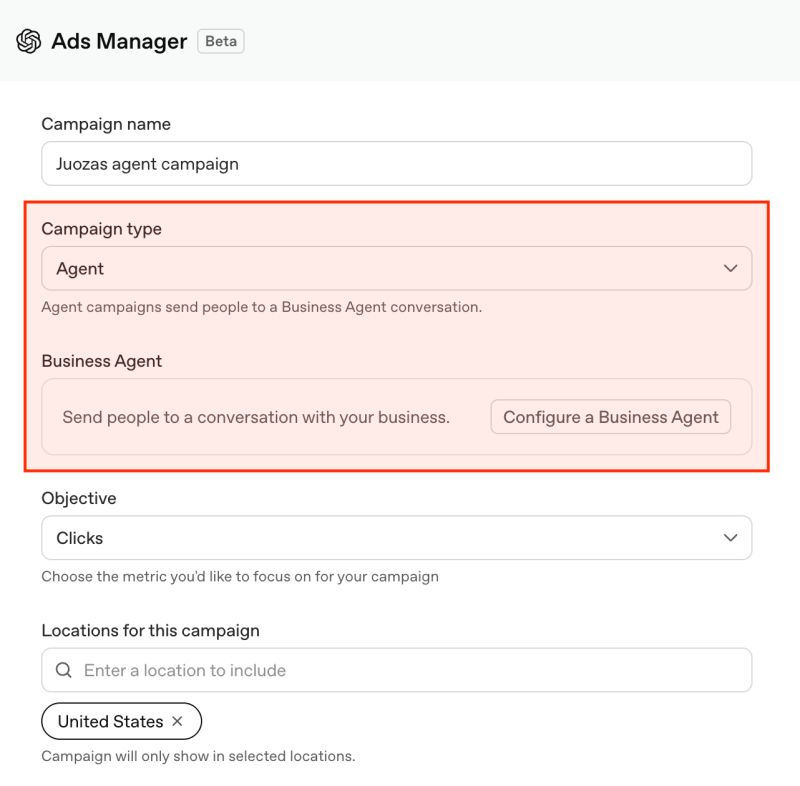
Ads That Do The Work - OpenAI is testing chatbot-native ads where clicking launches a business AI agent instead of a website, allowing users to ask questions, compare products, and complete tasks inside ChatGPT.
From Clicks To Actions - Businesses can build AI agents using website content, product feeds, MCP tools, and lead forms, shifting advertising from driving traffic to completing actions on a user’s behalf.
AI Search Spreads Visibility - One analysis found 168 different citations inside Google’s AI answers, suggesting AI search may reward being one of several trusted sources rather than only the top-ranked website.
Fewer Products, Fewer Chances - Google AI Mode showed roughly 95% fewer product listings than traditional Search for identical shopping queries, meaning ecommerce brands may see fewer opportunities for organic product discovery.
AI assistants are changing both advertising and search. Success may depend less on winning a single click and more on being trusted enough for AI systems to recommend or act on your behalf.
🗝️ Tweet of the Day

Advertise with Us
Wanna put out your message in front of over 50,000 best marketers and decision makers?
Checkout our Partner Kit here🤝
At Buyology, we care about our readers and want to provide the best possible experience. That's why we always look for ways to improve our content and connect with our audience. It would be amazing if you could hit us up with feedback about our content or absolutely anything, we are always up for a chat 🥰
Thanks for your support, We'll be back with more such content 🥳